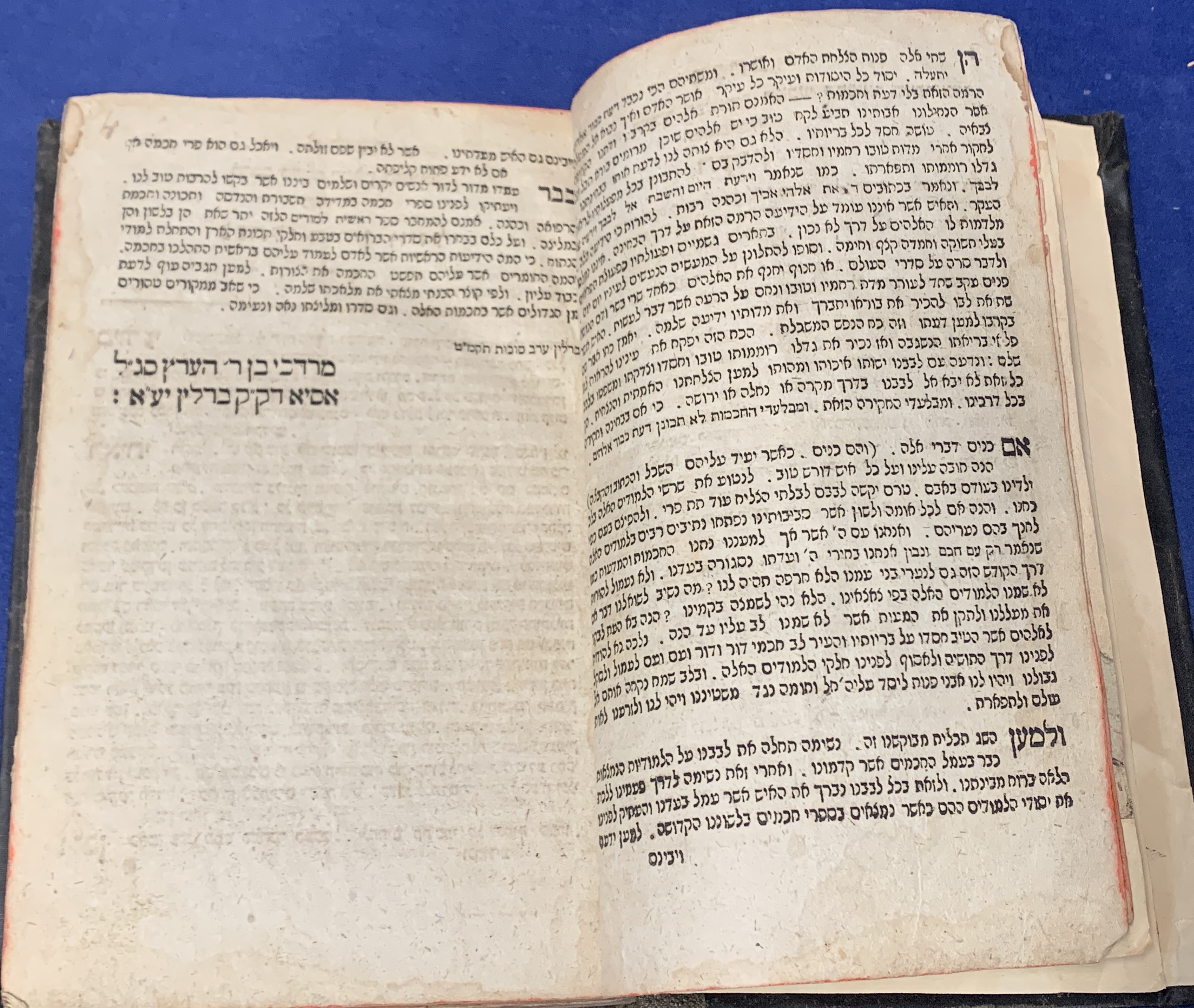
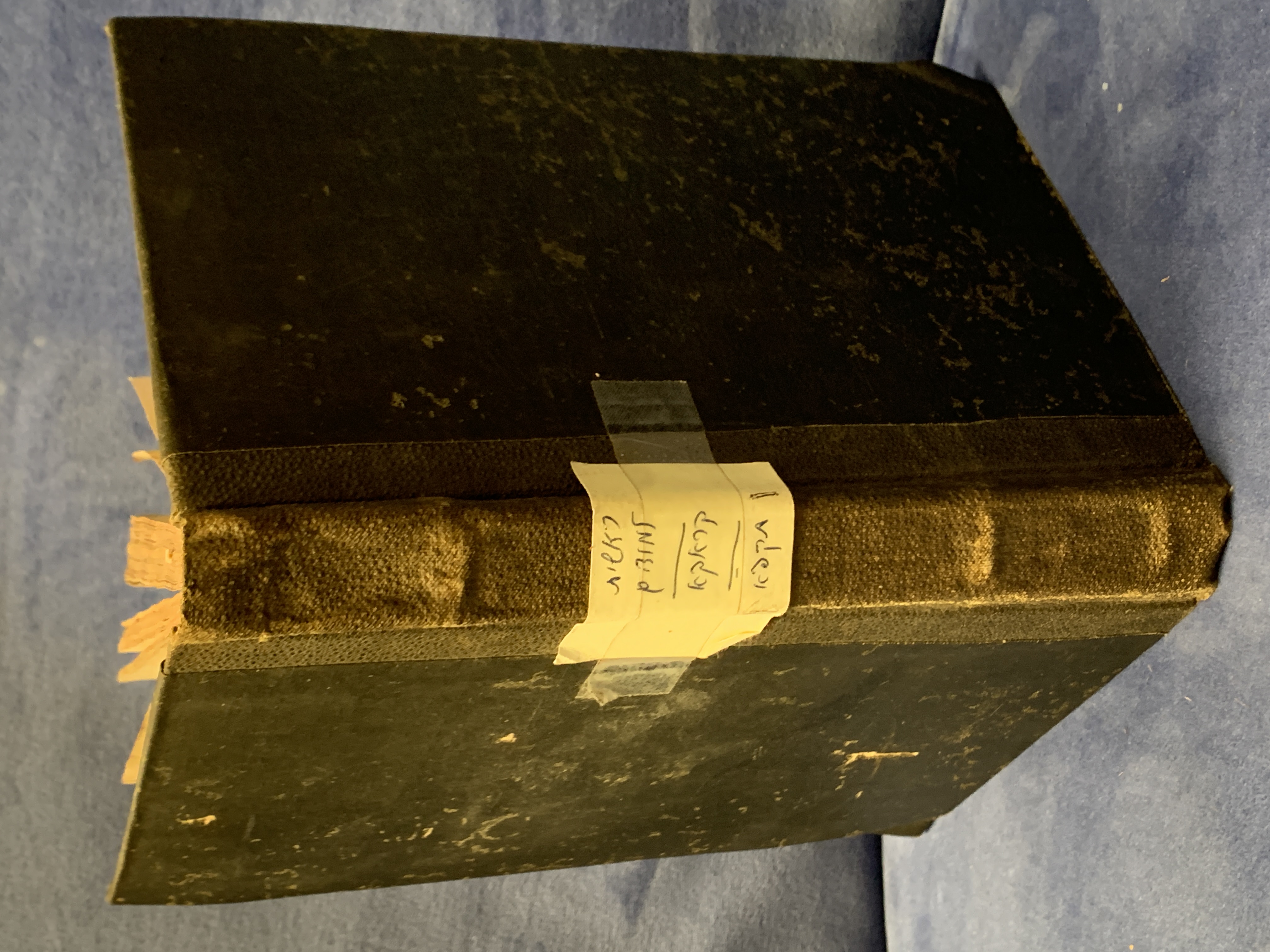
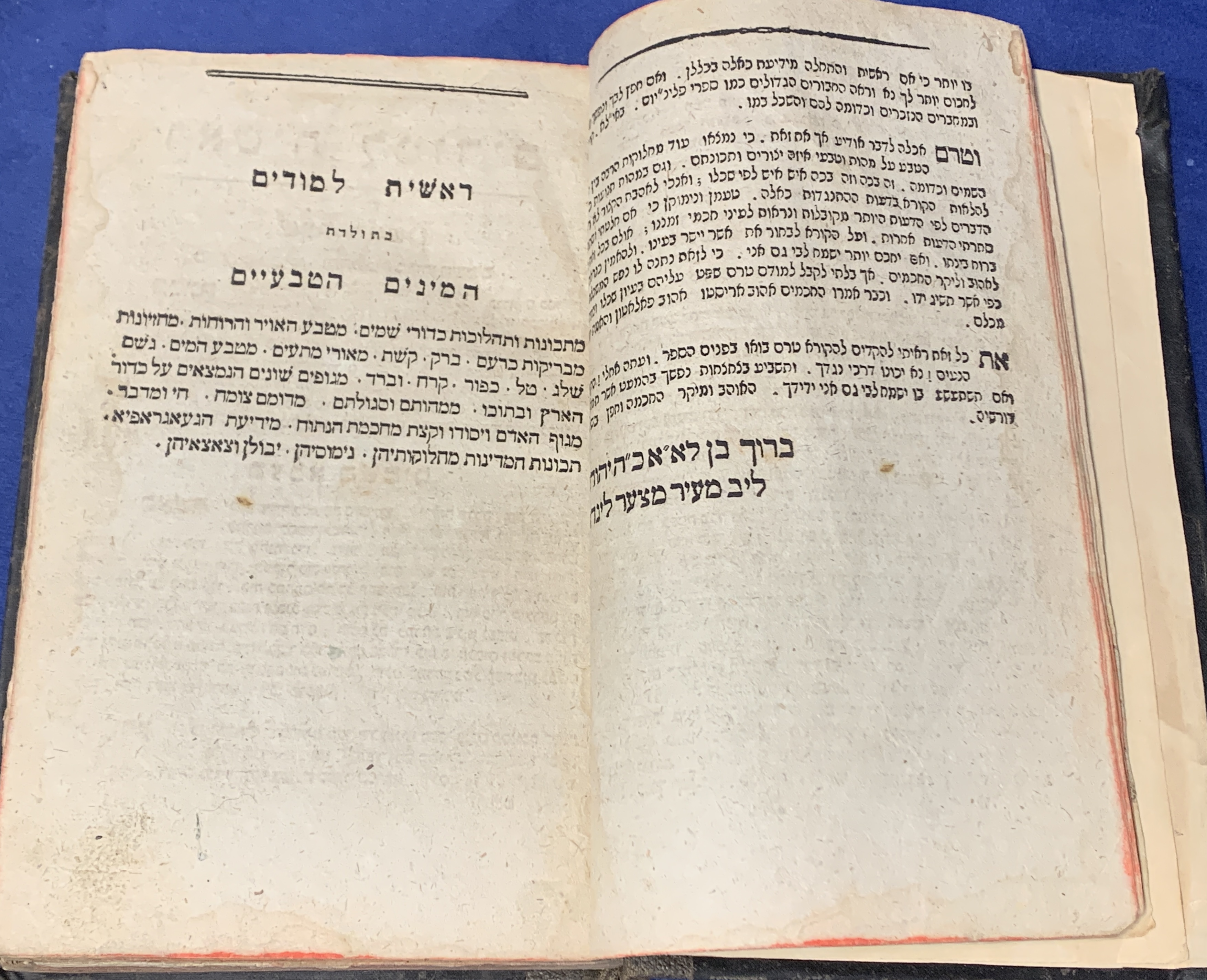
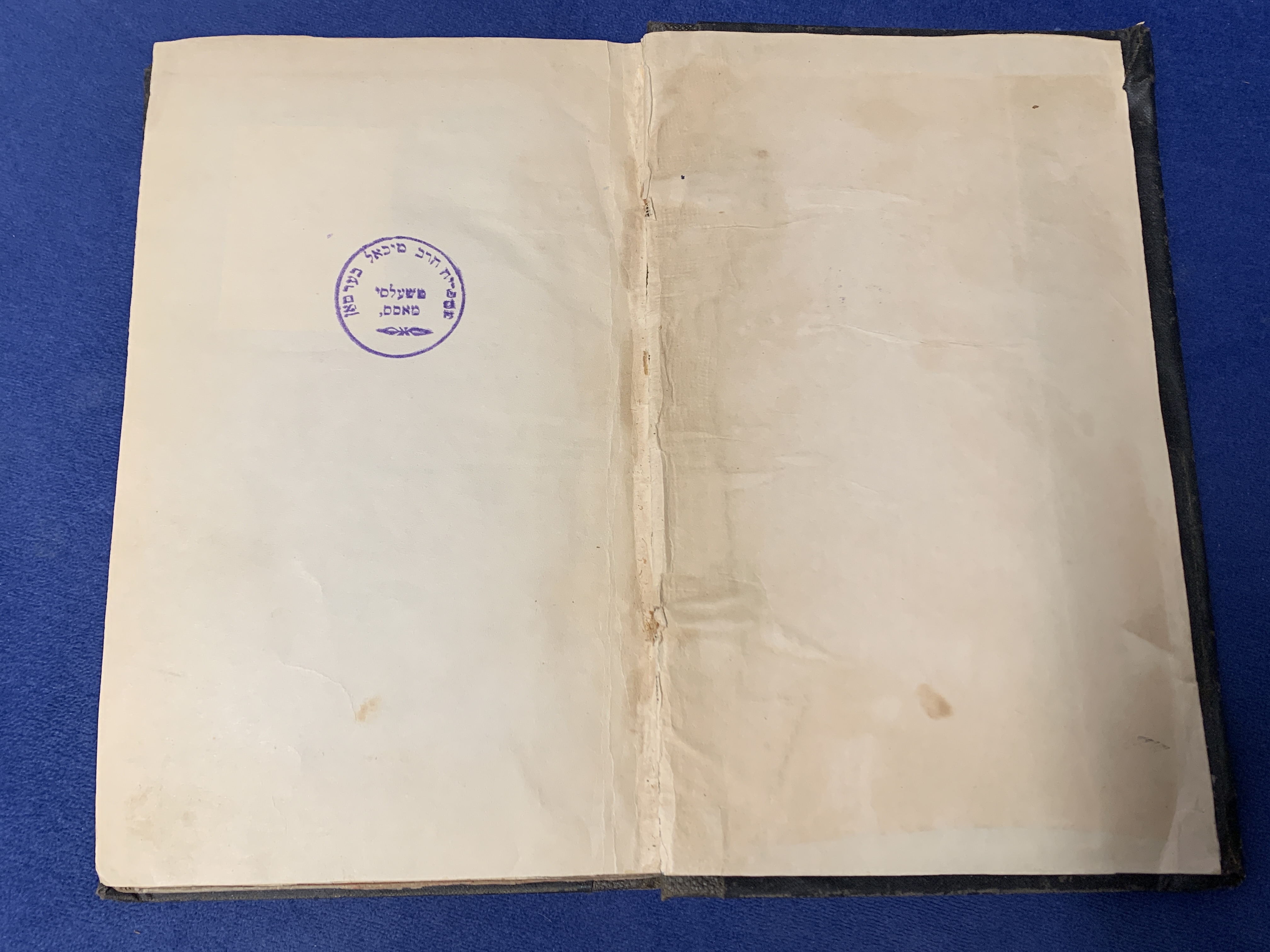
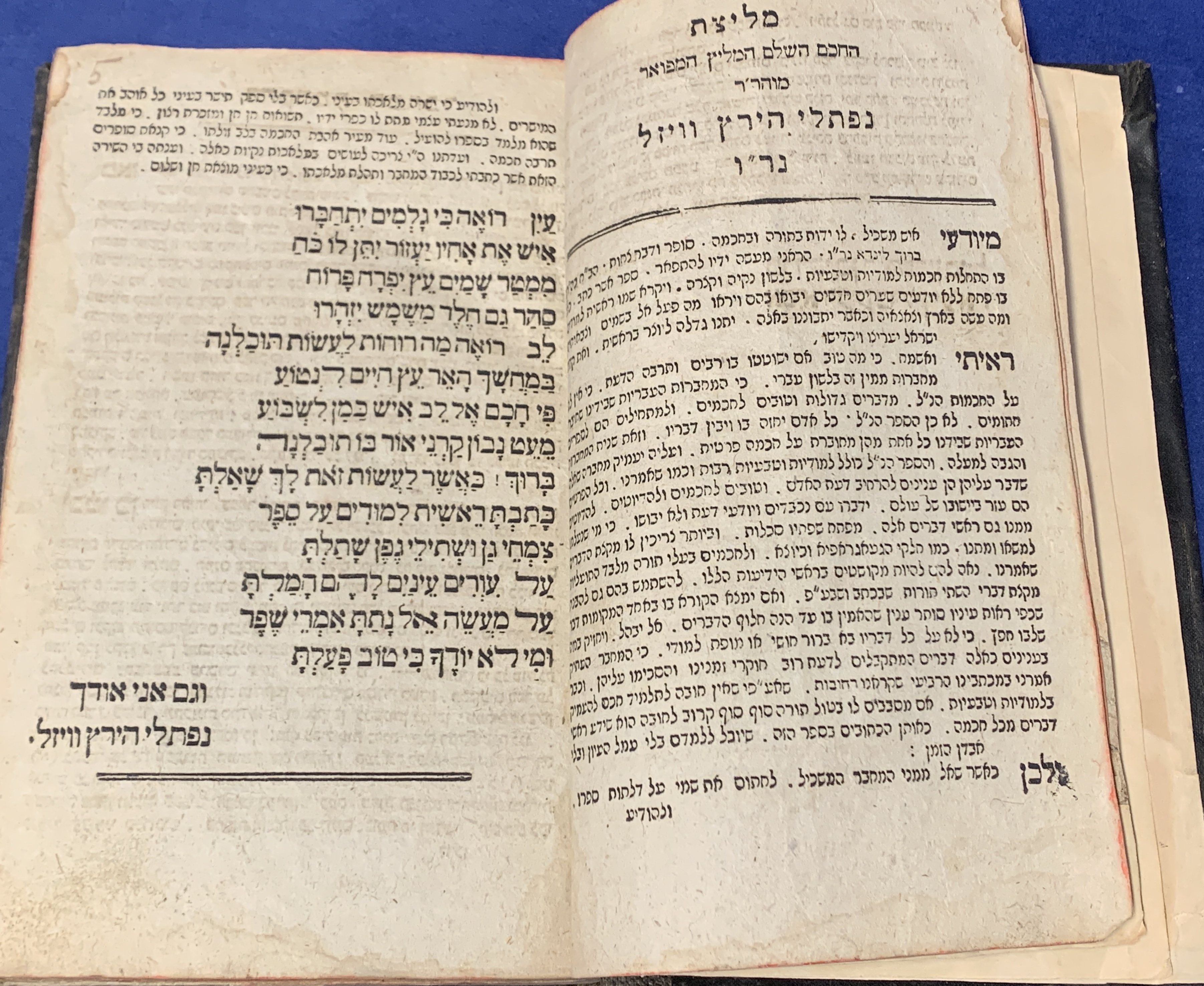
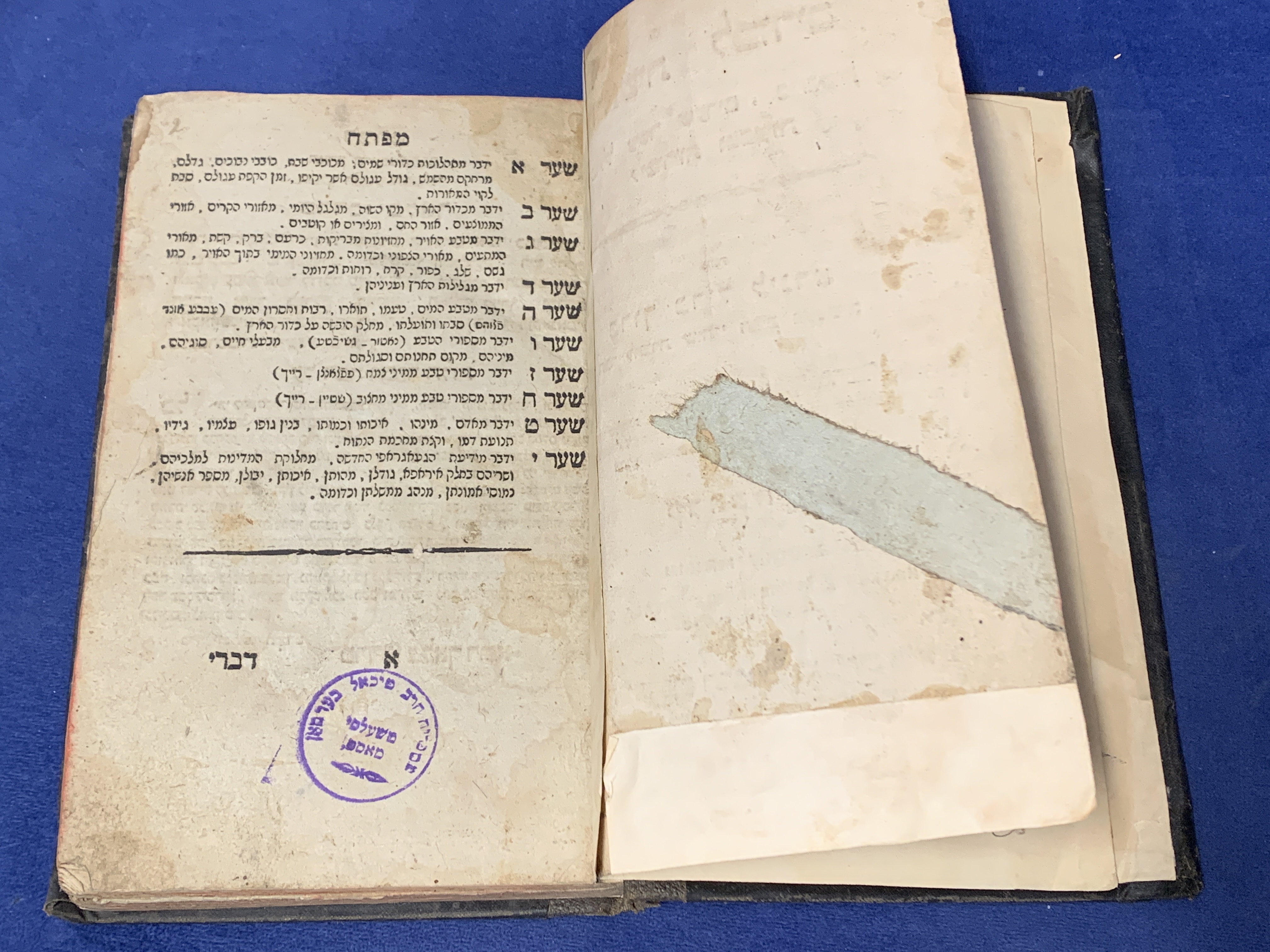
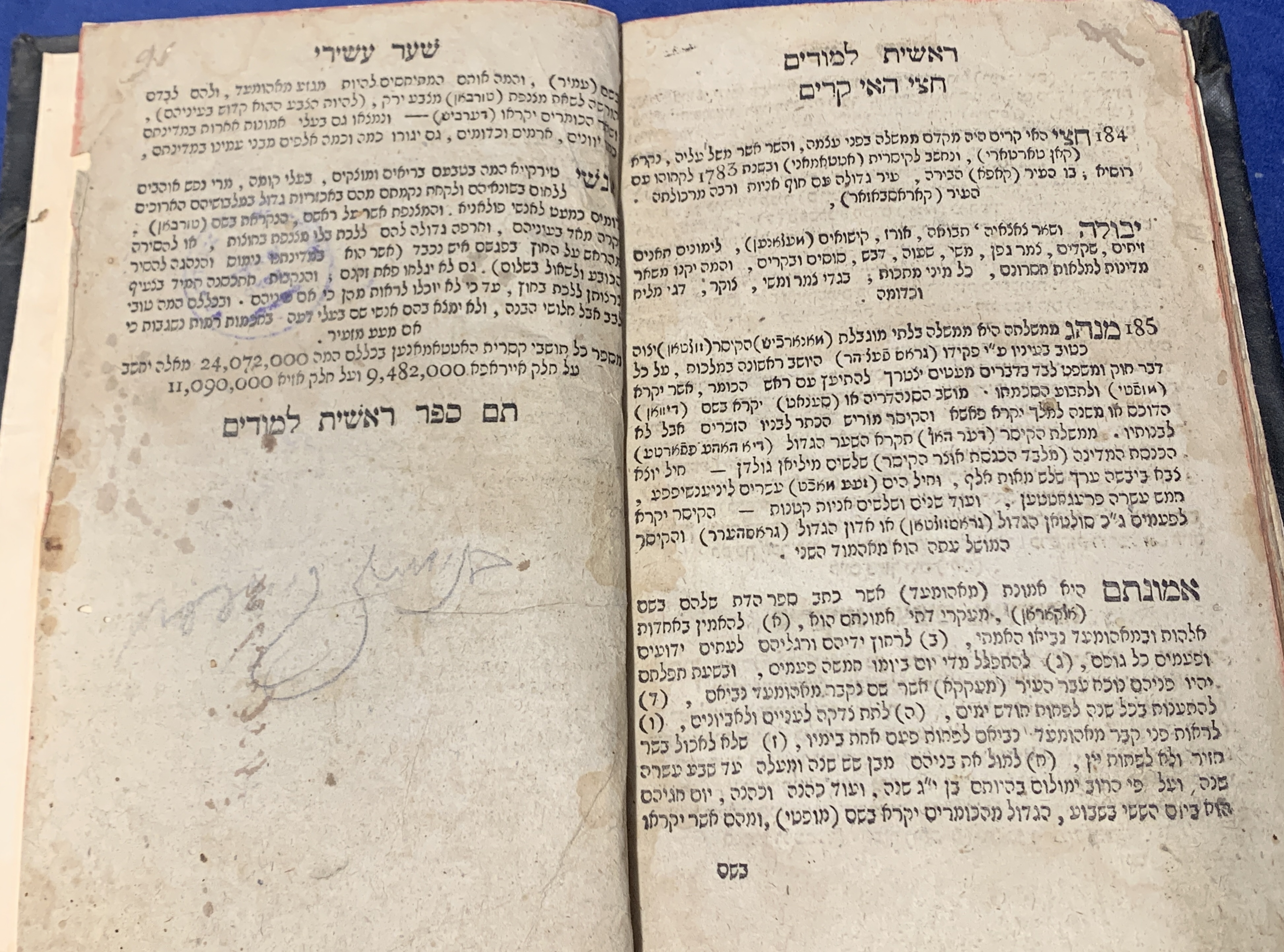
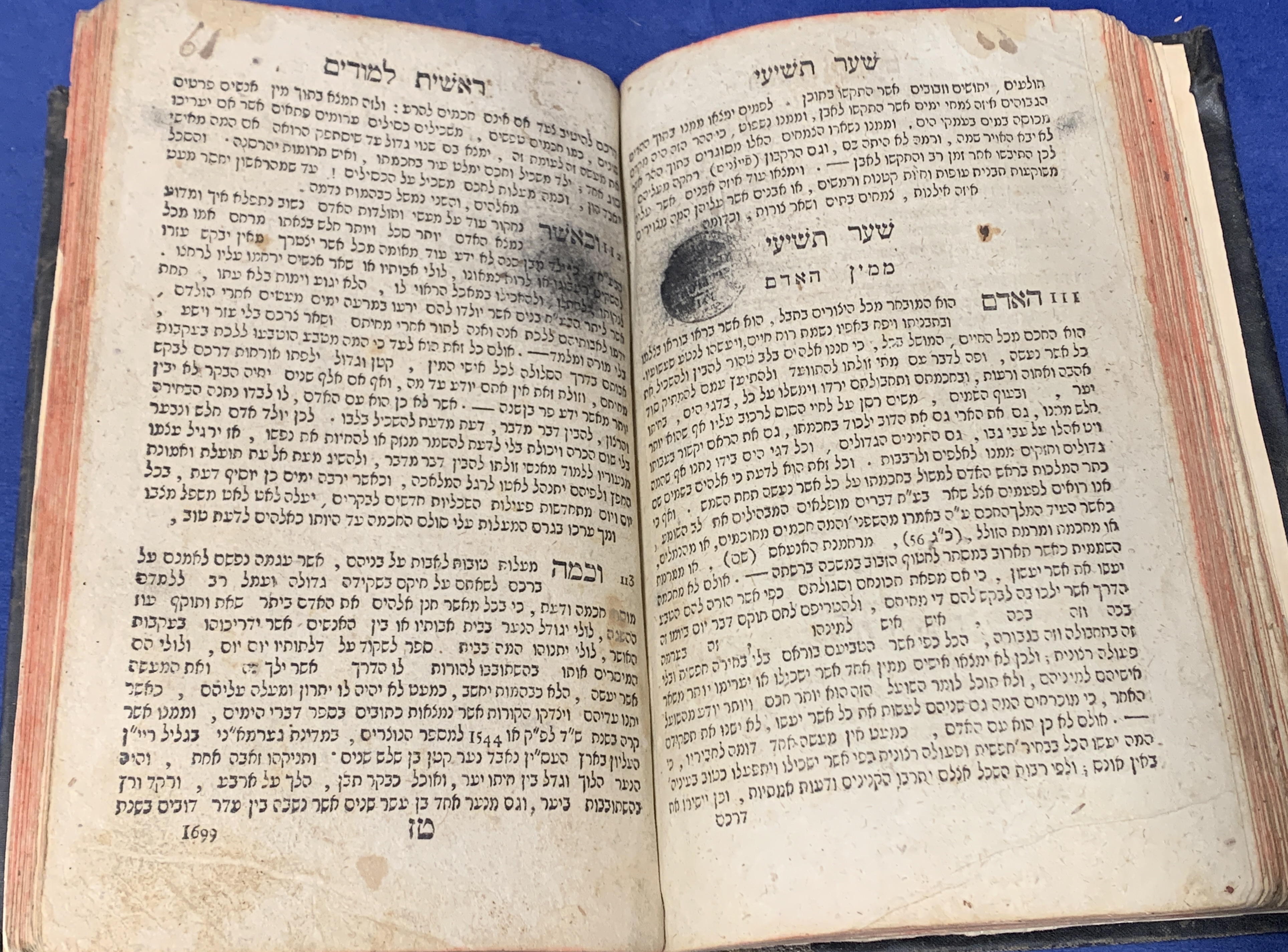
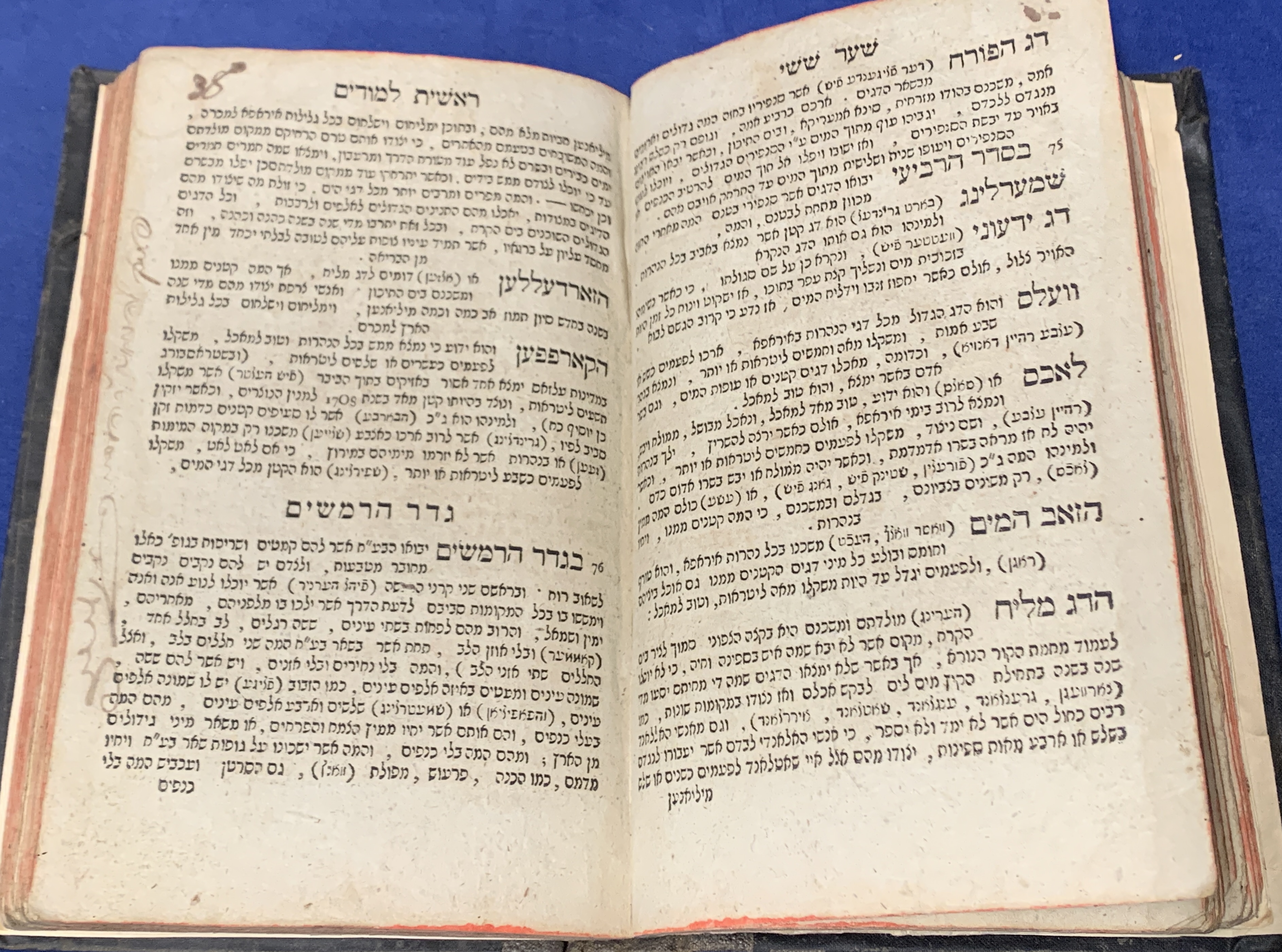
A rare and historically crucial Hebrew scientific textbook (encyclopedia) whose publication ignited the fierce intellectual debate between the Haskalah (Jewish Enlightenment) and traditional Orthodoxy.
This volume,
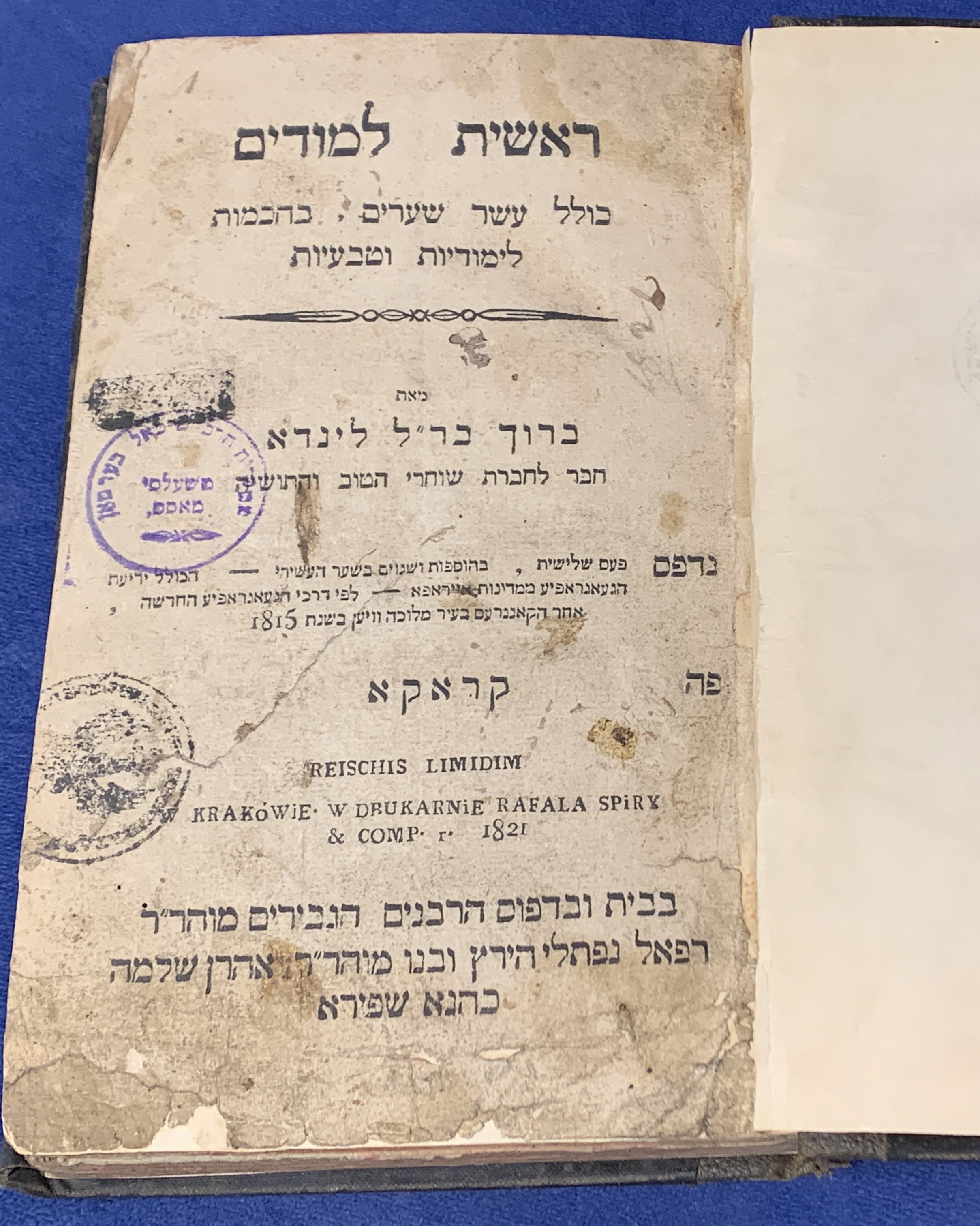
"Reishit Limudim" (ראשית למודים) by
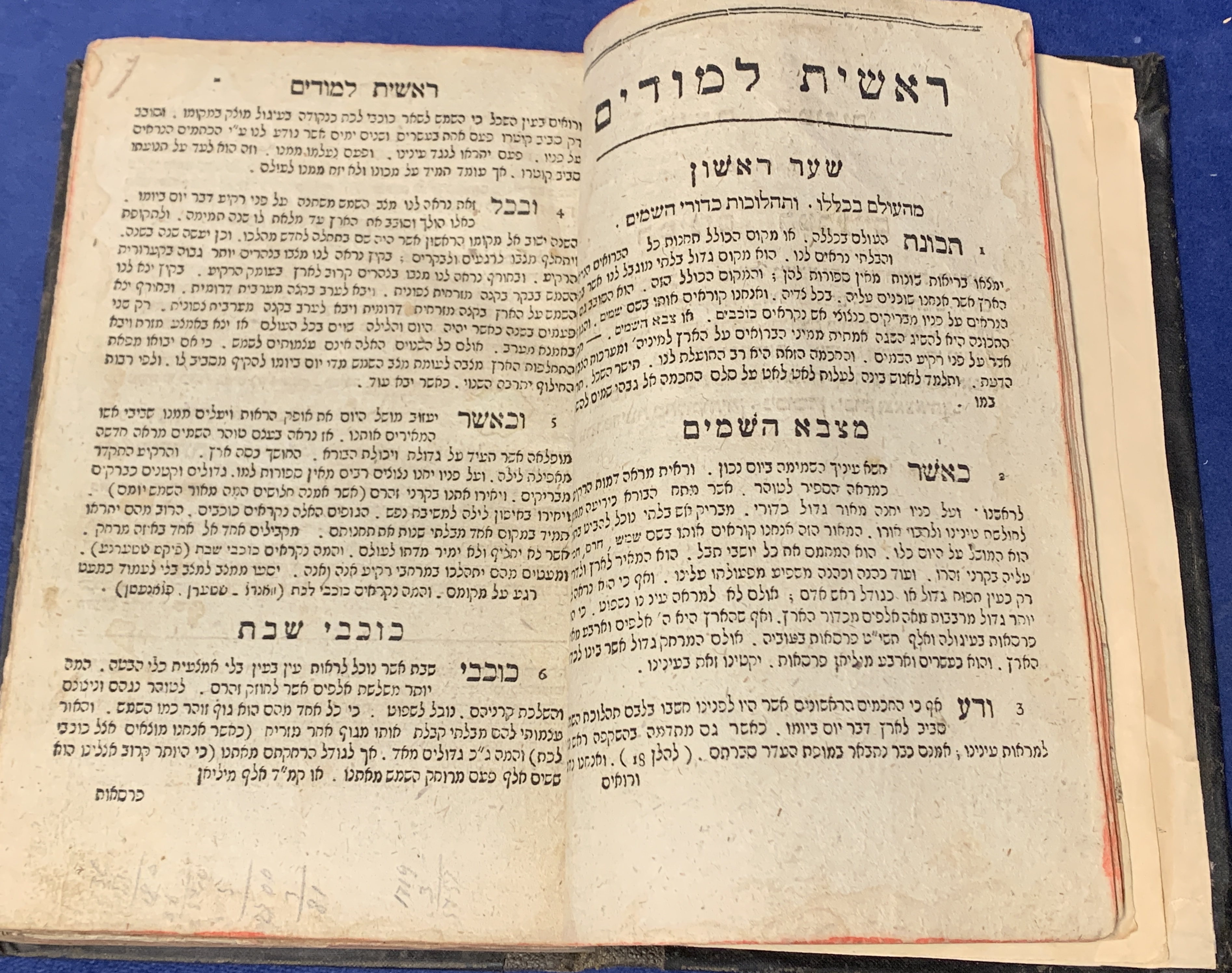
Baruch Lindau, is a landmark in modern Hebrew literature. It served as the first popular Hebrew textbook covering secular and natural sciences, including astronomy, geography, and geometry. Its objective was to reform Jewish education by adding these subjects (Hokhmat Ha-Teva) to the religious curriculum.
Key Bibliographical Details:
- Author: Baruch ben Judah Löb Lindau (c. 1758–1849), a foundational figure of the Berlin Haskalah.
- Edition & Date: Third Edition, printed in Krakow (Poland) in 1821. The printing of a third edition in Eastern Europe well into the 19th century demonstrates the sustained demand for this controversial material in the heart of traditional Jewish life.
- Content: Contains "Ten Gates in General and Natural Sciences" (חכמות לִמודיות וטבעיות).
The Historical and Ideological Significance
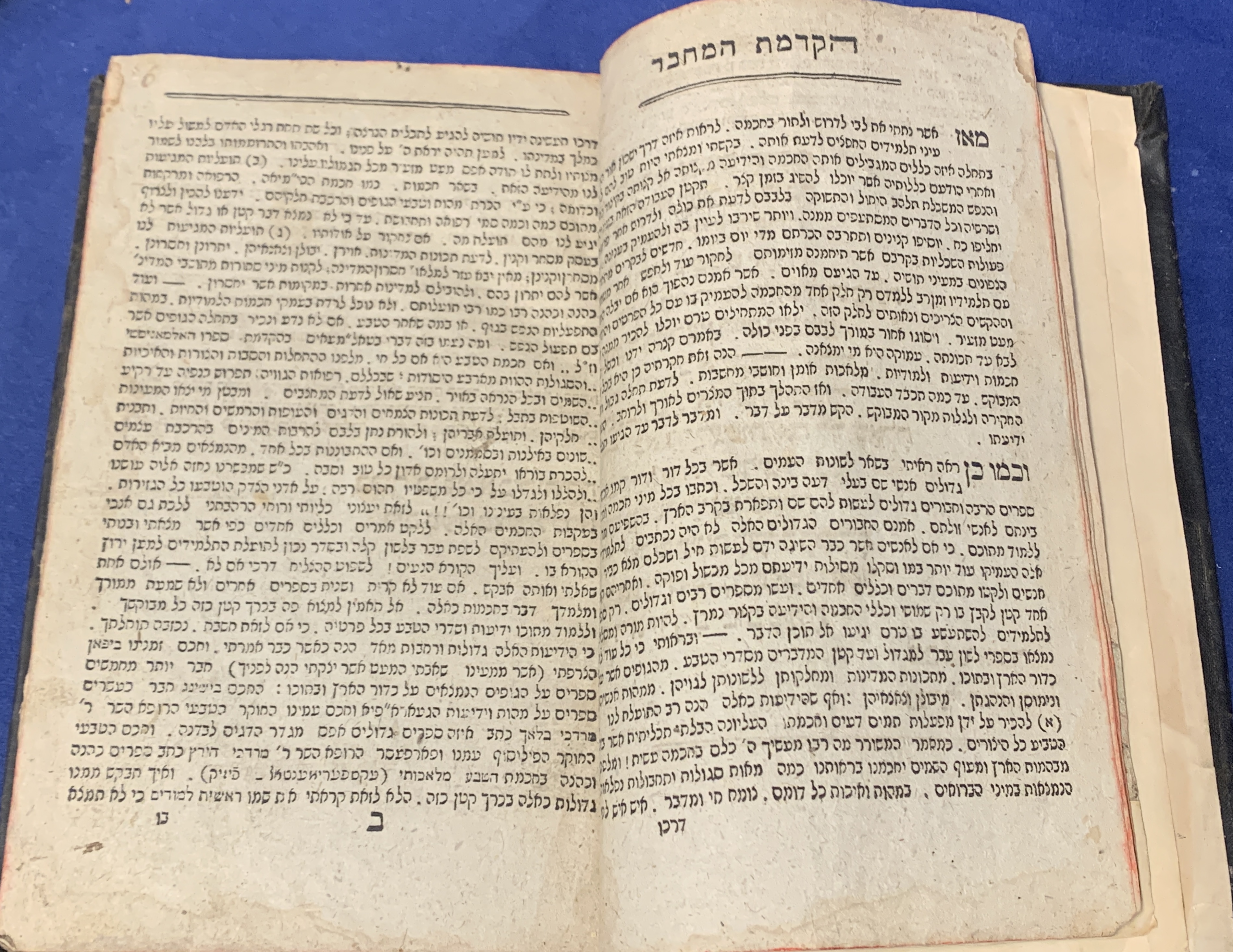
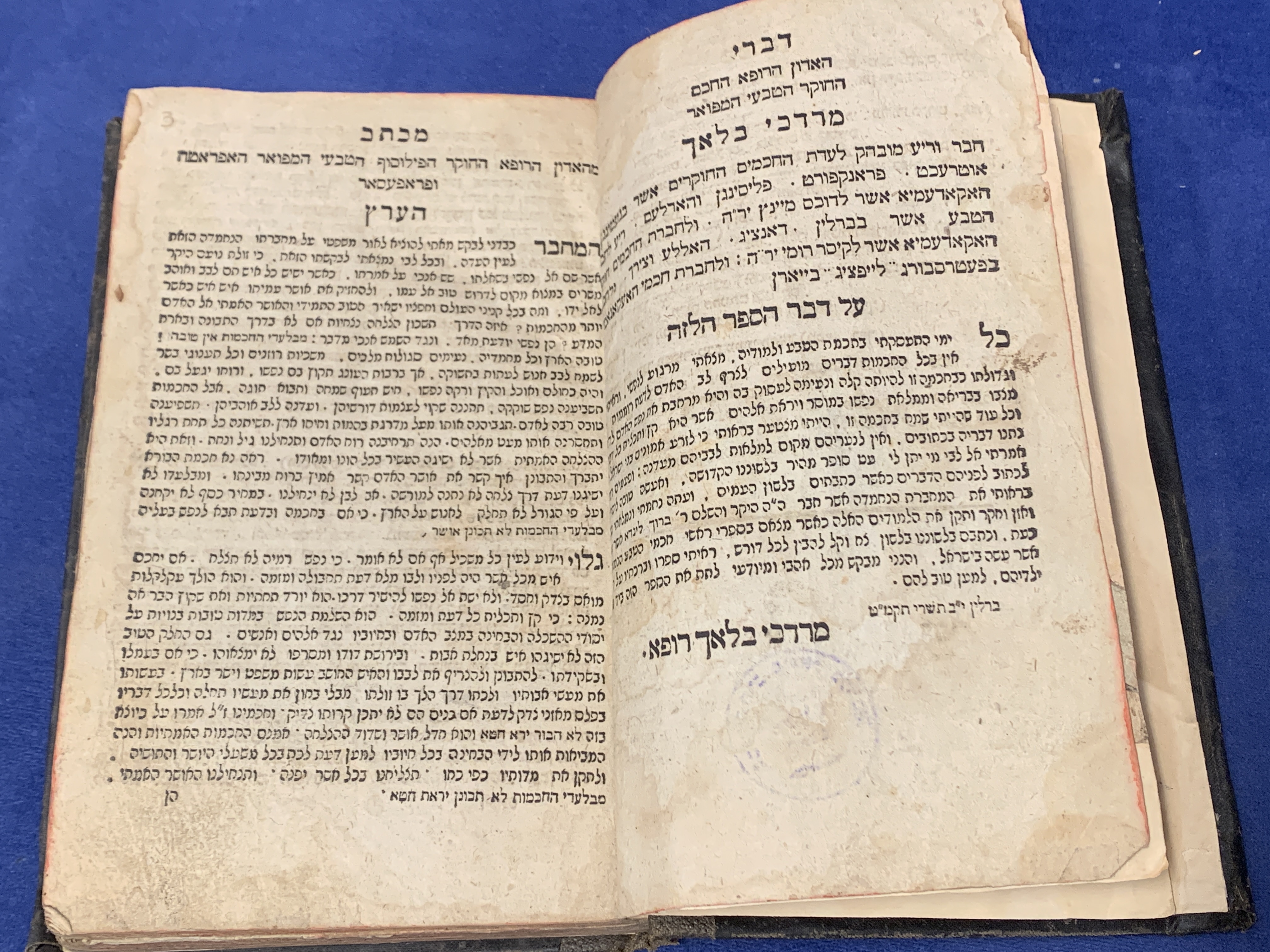
This book was fiercely opposed by many traditional Orthodox rabbis, who viewed the pursuit of secular and scientific knowledge as a dangerous "window to knowledge" that would lead to assimilation and deviation from tradition. The book’s ideological importance is cemented by the endorsements it carries:
- Naphtali Herz Wessely: The book follows the ideological path of Wessely’s controversial 1782 manifesto, which advocated for the mandatory inclusion of general studies in Jewish education.
- Endorser: Dr. Marcus (Mordechai) Elieser Bloch, the Physician (מרדכי בלאך הרופא)
- Bloch (1723–1799) was a celebrated Jewish physician and scientist in Berlin.
- He was a close friend and personal physician of Moses Mendelssohn.
- He was a globally recognized pioneer in natural science, regarded as one of the founders of Ichthyology (the study of fish).
- His endorsement places the book firmly in the inner circle of the revolutionary Berlin Haskalah, highlighting the Maskilim’s focus on reconciling science and Judaism.
A mandatory addition to any serious collection of Jewish Enlightenment literature, early scientific texts, or historical Judaica.