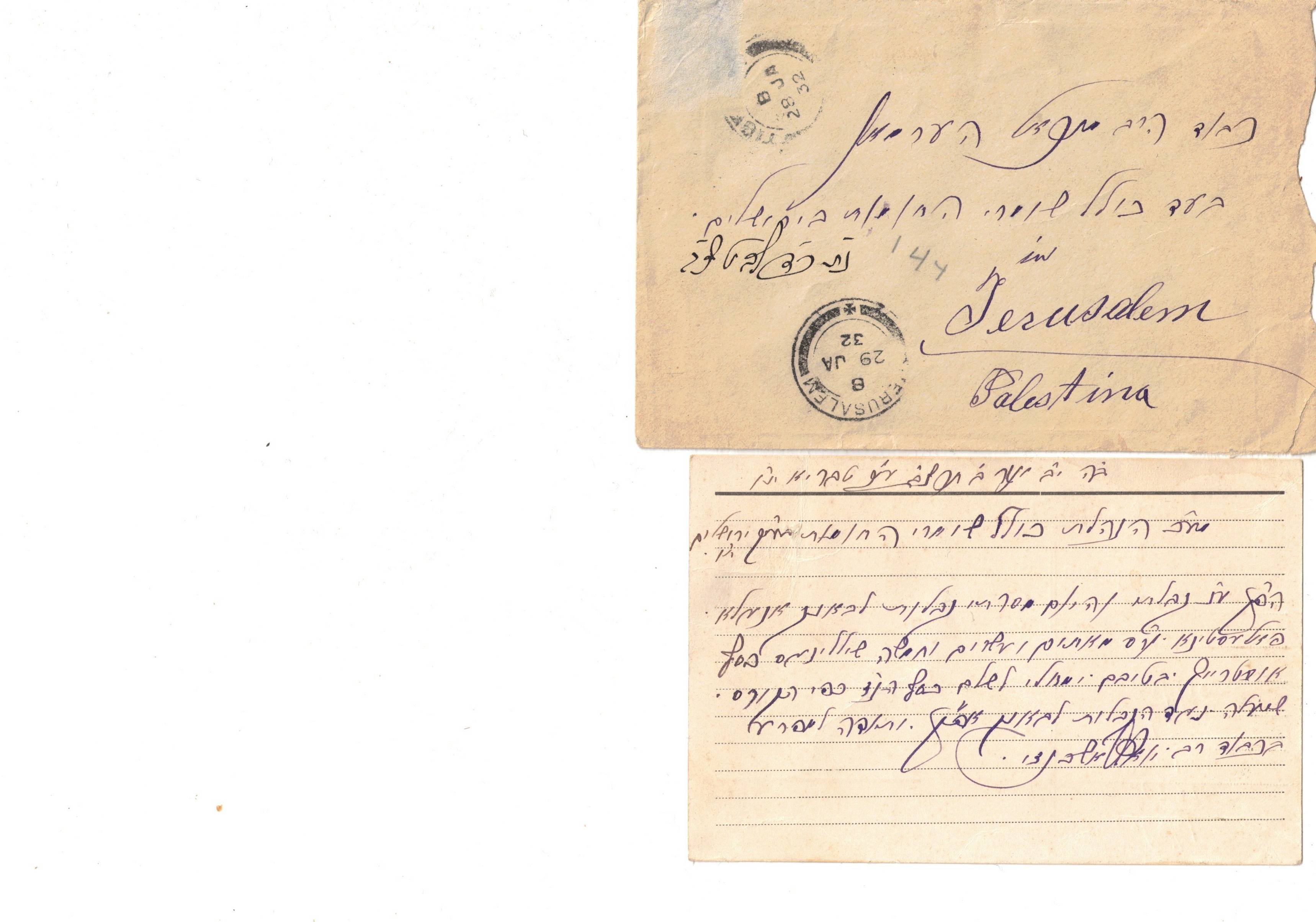
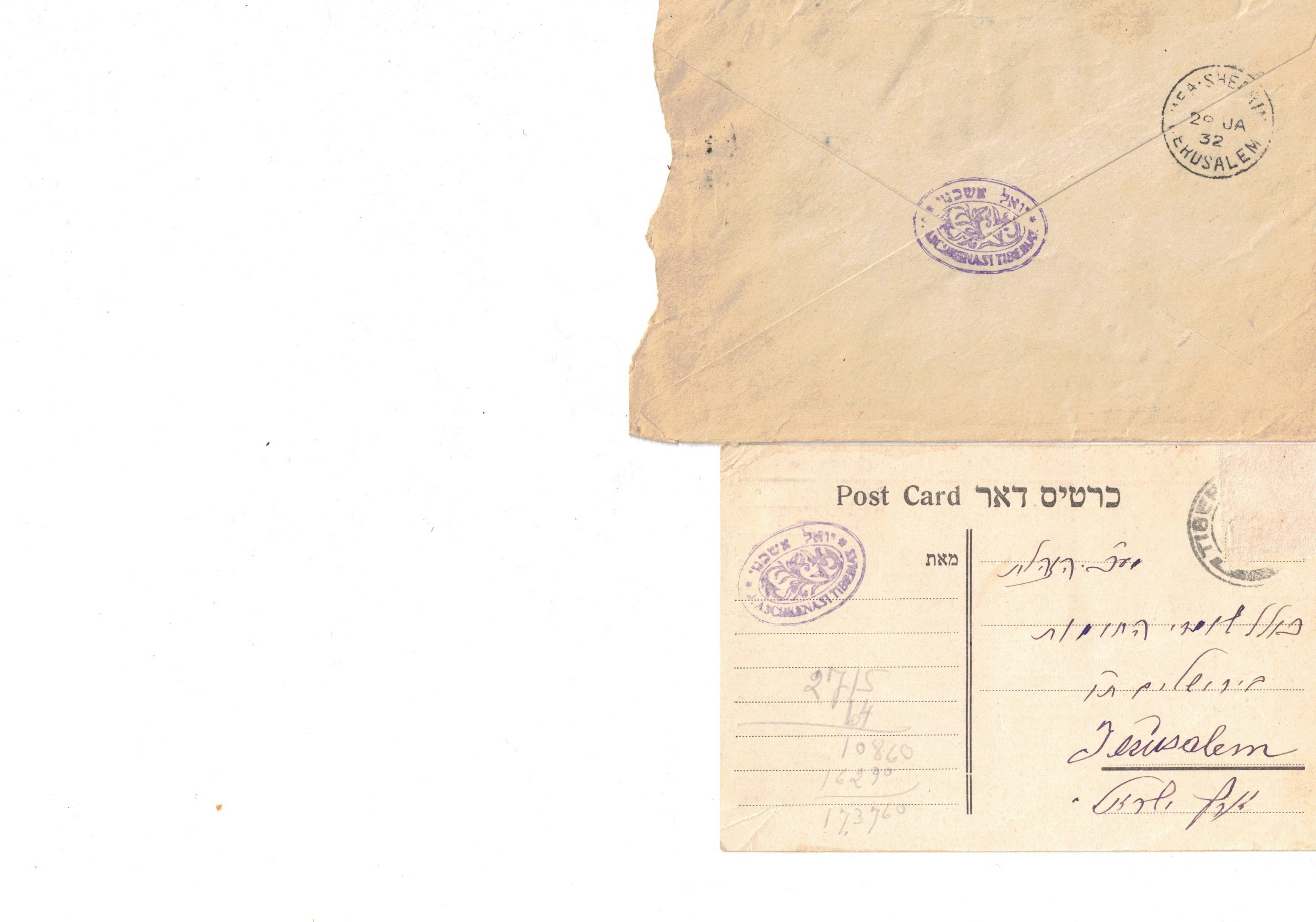
Content: A fascinating, handwritten historical postcard paired with its original matching postmarked mailing envelope. Sent from the holy city of Tiberias to the Gabbaim and trustees of the historic Kollel Shomrei HaChomat (כולל שומרי החומות) in Jerusalem. The text, written in fluent Rabbinic script, dynamically addresses the collection and distribution of vital charity (Tzedakah) funds earmarked for the needy families of Tiberias.
Author: The prominent and universally respected Tiberias Chassidic scholar, Rabbi Yoel Ashkenazi (רבי יואל אשכנזי; 1884–1970). Born into a revered rabbinic lineage (Ben Shel Kedoshim), he was the son of Rabbi Baruch Ashkenazi. After migrating to Safed in 1890, he married the daughter of Rabbi Noach Weinberg (grandson of the holy Yesod HaAvodah of Slonim) and subsequently settled as a cornerstone of the Chassidic community in Tiberias.
Postal & Historical Value: The envelope and card feature highly visible, crisp historical postal stamps from Mandatory Palestine dated January 20 and January 29, 1932 (20 JA 32 / 29 JA 32), bearing bilingual cancellations reading "Tiberias" and "Jerusalem / Palestina". Furthermore, the items display the prestigious official purple ink wax-imprint seal of the Kollel Shomrei HaChomat ("כולל שומרי החומות לצדקת ר’ מאיר בעל הנס").
Notable Connection: Rabbi Yoel Ashkenazi was a towering intellectual figure in the Old Yishuv and maintained a legendary close relationship and rich correspondence with the Satmar Rebbe, Rabbi Yoel Teitelbaum. This lot captures the operational framework of pre-war Palestinian Chassidic infrastructure and the legacy of one of Tiberias’s most famous 20th-century Chassidic figures.
Condition report:
Status: Very Good Antique Condition.
Details: The text block on both the card and envelope remains entirely dark, crisp, and 100% legible. The paper showcases a beautiful natural amber patina consistent with its age and handle.
Wear: The envelope exhibits original raw, deckled edge tearing on the left margin from its initial opening by the recipient in 1932, which does not compromise any text or the clear postmark stamp impressions.