Judaica and Hasidic Books and Manuscripts

Historic 1928 Rabbinic Subscription Postcard – Rabbi H. Goldberg of Kielce, Poland to "Kol Israel" in Jerusalem

Auction will begin to close in __ days and __ hours

Start price: £100

Buyer's Premium:

Description

A remarkable primary document capturing the media and communication networks that linked European Orthodox communities with the ideological center of Agudat Yisrael in Jerusalem during the interwar period.

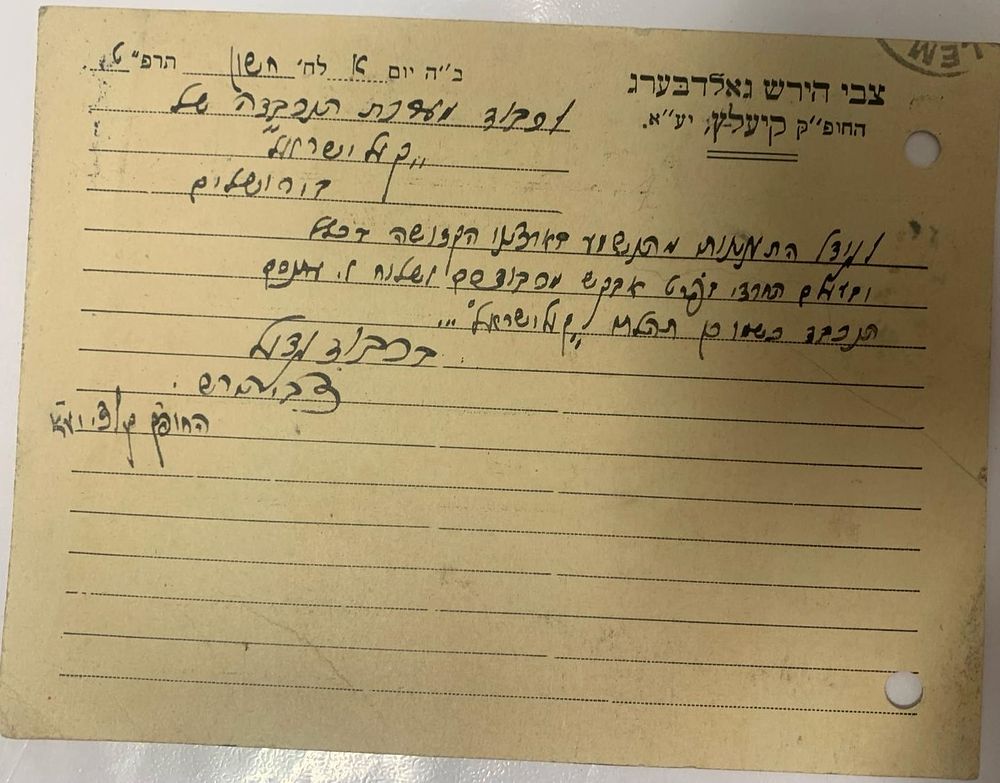
  • Overview: An official printed rabbinic stationery postcard dated in the winter of 1928 (ב"ה יום ג’ לח’ חשון תרפ"ט / October 1928), written from Poland to Mandatory Palestine.
  • The Author: Rabbi Chanoch Goldberg (הגאון רבי חנוך גולדברג זצ"ל), a prominent rabbinic authority and community leader active in Kielce, Poland (קילץ). He signs his name at the conclusion of the Hebrew text: "Chanoch Goldberg" (חנוך גולדברג).
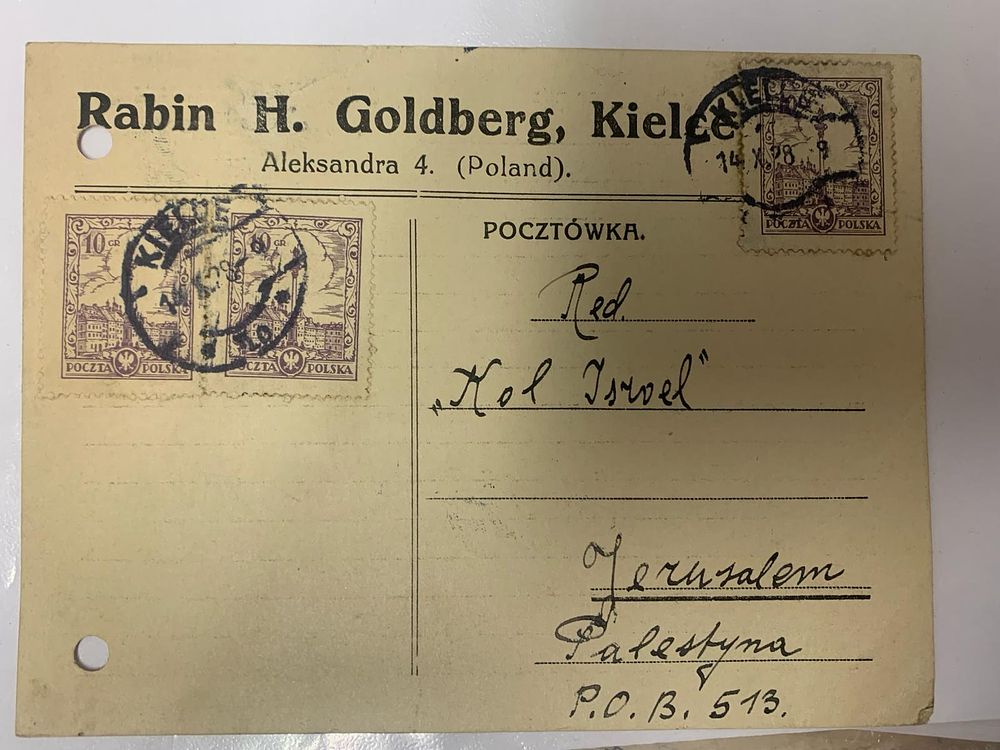
  • The Content: Written entirely in a neat rabbinic script, Rabbi Goldberg formally requests a subscription setup to the famous Orthodox weekly publication Kol Israel (קול ישראל), addressed to the editorial board in Jerusalem (POB 513). The card reflects the thirst of European community leaders for first-hand religious news from Eretz Yisrael.
  • Postal Marks & Provenance: The front of the postcard features Rabbi Goldberg’s printed English rabbinic letterhead: "Rabin H. Goldberg, Kielce – Aleksandra 4 (Poland)". It is adorned with three original Polish postage stamps cleanly struck with the native Kielce postmarks dated October 14, 1928.
  • Collector’s Highlight: Ephemera tracing the direct intellectual and institutional distribution channels between pre-war Polish Agudat Yisrael hubs and the Old Yishuv in Jerusalem are highly prized. Items from the community of Kielce carry a premium due to the near-total destruction of local archives during the Holocaust.

Condition report:

Status: Very Good Antique Condition.


Details: The postcard is structurally complete and solid, showing clean edges, crisp text lines, and uniform natural age-toning. It features two clean original binder archive hole punches along the left-hand margin, far removed from any text boundaries. The handwritten Hebrew script, the printed English heading, and the postal markings on the front remain exceptionally bold, dark, and perfectly distinct.