Judaica and Hasidic Books and Manuscripts

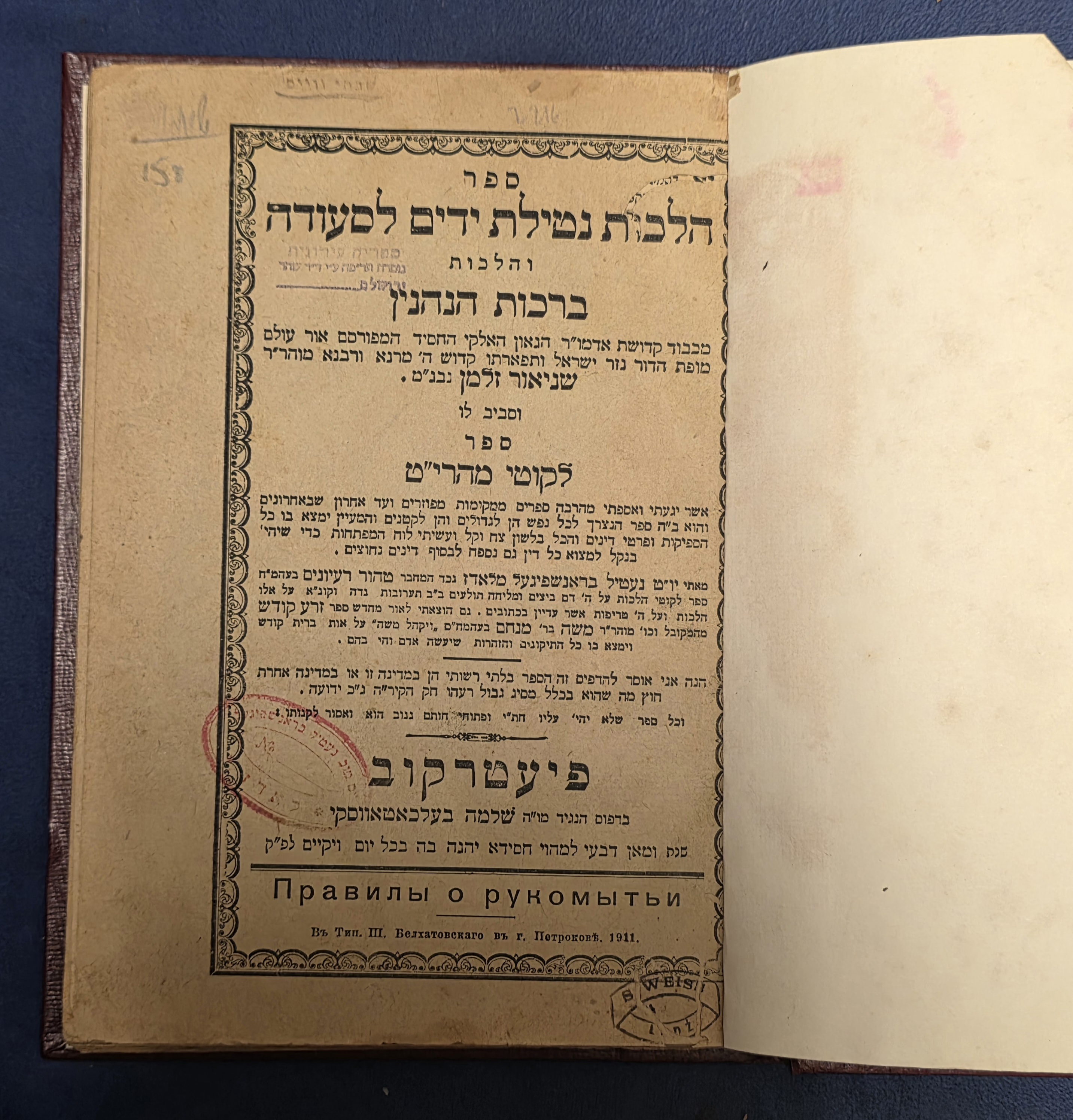
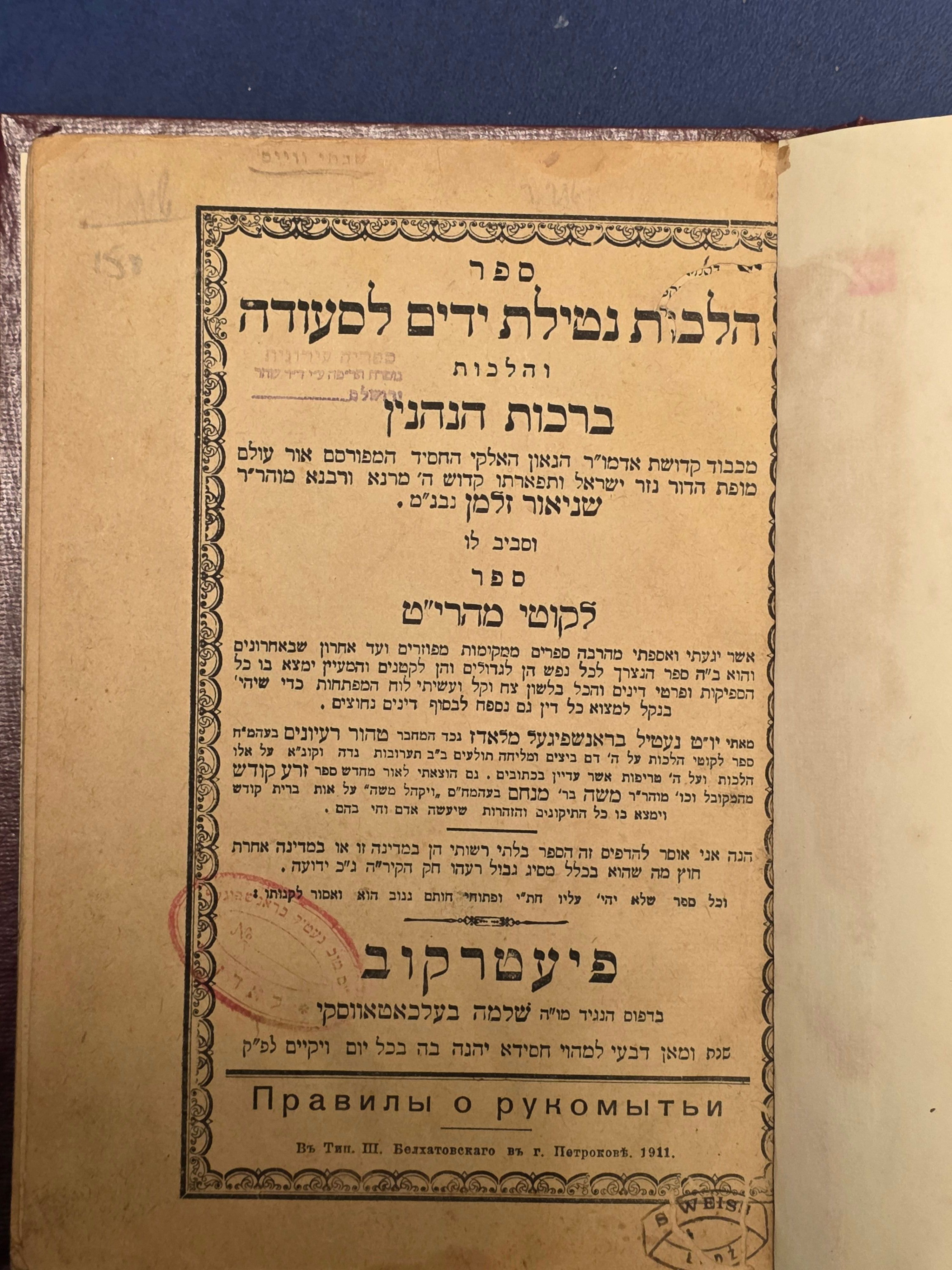
Rare 1911 Piotrków Edition: Alter Rebbe's Hilchot Netilat Yadayim L'Seudah & Birchot HaNehenin with Likkutei Mahari't

Auction will begin to close in __ days and __ hours

Start price: £100

Buyer's Premium:

Description

A well-preserved 1911 Piotrków edition of fundamental Chabad halachic rulings regarding meals and blessings, pairing the Alter Rebbe’s authoritative text with comprehensive marginal commentary.


  • The Work & Author: The main text was authored by the revered founder of the Chabad-Lubavitch Hasidic movement, Rabbi Shneur Zalman of Liadi (שניאור זלמן מליאדי), famously known as the Alter Rebbe and the Baal HaTanya. This specific volume features the extensive surrounding commentary, Likkutei Mahari’t (לקוטי מהרי"ט), which meticulously unpacks the Alter Rebbe’s rulings.
  • About the Commentator: Likkutei Mahari’t was compiled and authored by Rabbi Yom Tov Natil Branshpigel of Lodz (רבי יום טוב נעטיל בראנשפיגעל מלאדז’). A respected scholar and author of the 1904 work Likkutei Halachot (לקוטי הלכות), Rabbi Branshpigel dedicated this commentary to expanding upon and clarifying the profound halachic foundations laid by the Alter Rebbe.
  • Publishing Details: Printed in Piotrków (פיעטרקוב), Poland in 1911 under the Russian Empire, as noted by the Cyrillic text at the bottom of the title page. The text is beautifully formatted, with the Alter Rebbe’s primary text in the center and the commentary respectfully wrapping around the margins.
  • Notable Connection: This edition is a highly sought-after acquisition for Chabad-Lubavitch followers and collectors of Hasidic literature. It serves not only as a practical guide to the Alter Rebbe’s halachic rulings on handwashing and blessings—foundational elements of daily Jewish life—but also as a testament to the wide-reaching influence of his legal genius on subsequent rabbinic scholarship.

Condition report:

Status: Good Antique Condition with expected vintage wear.


Physical Dimensions: Approximately 22x15 cm (8.5 x 6 inches) — a standard octavo (8vo) format typical of Eastern European printings of this era.

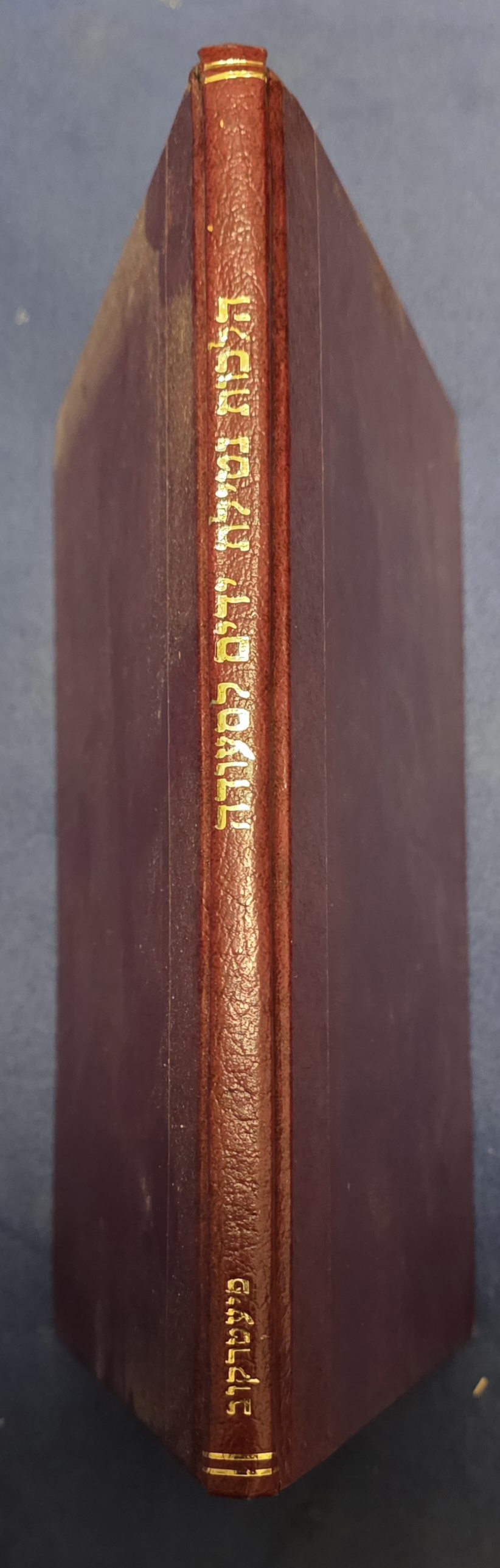
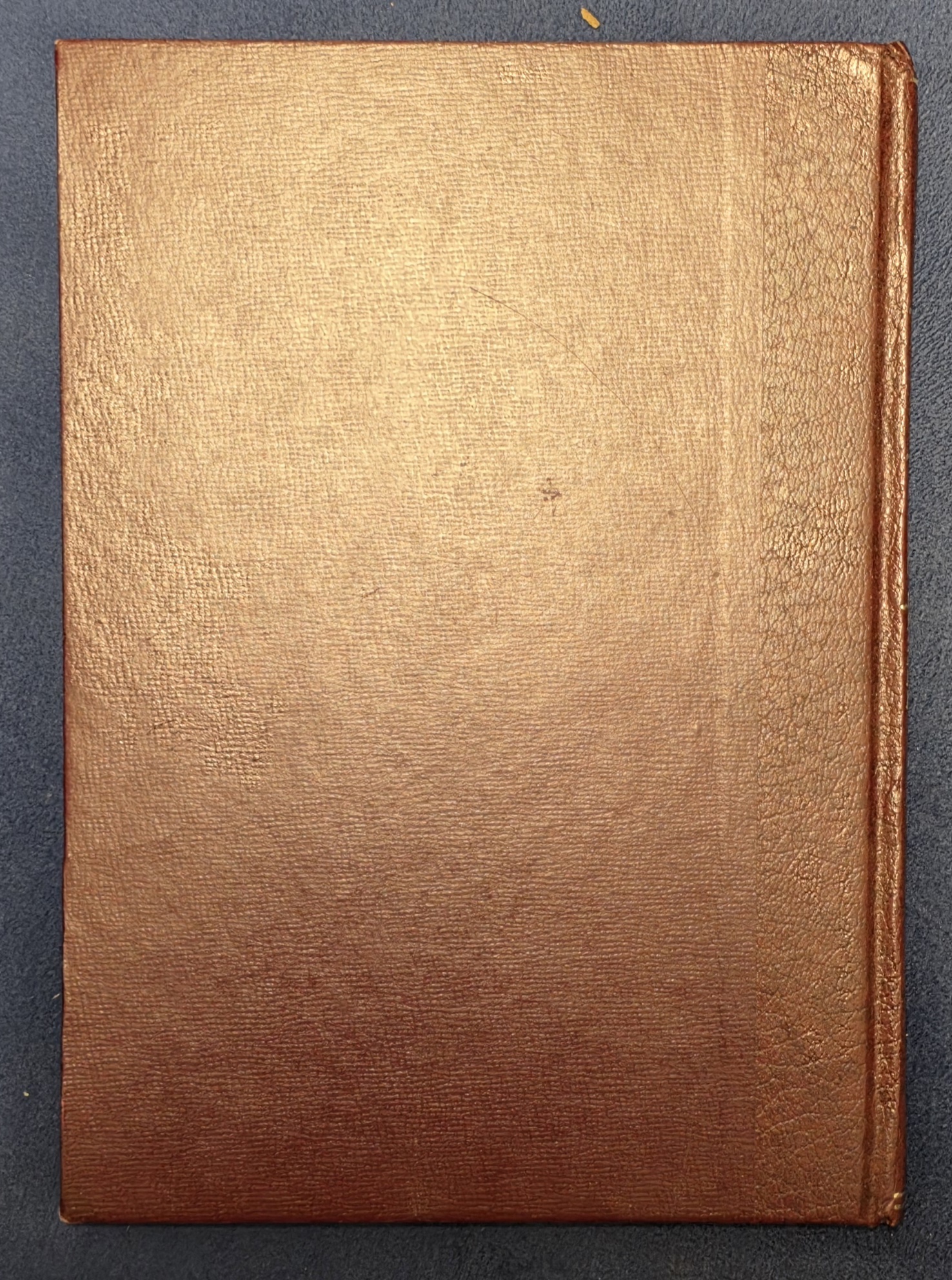
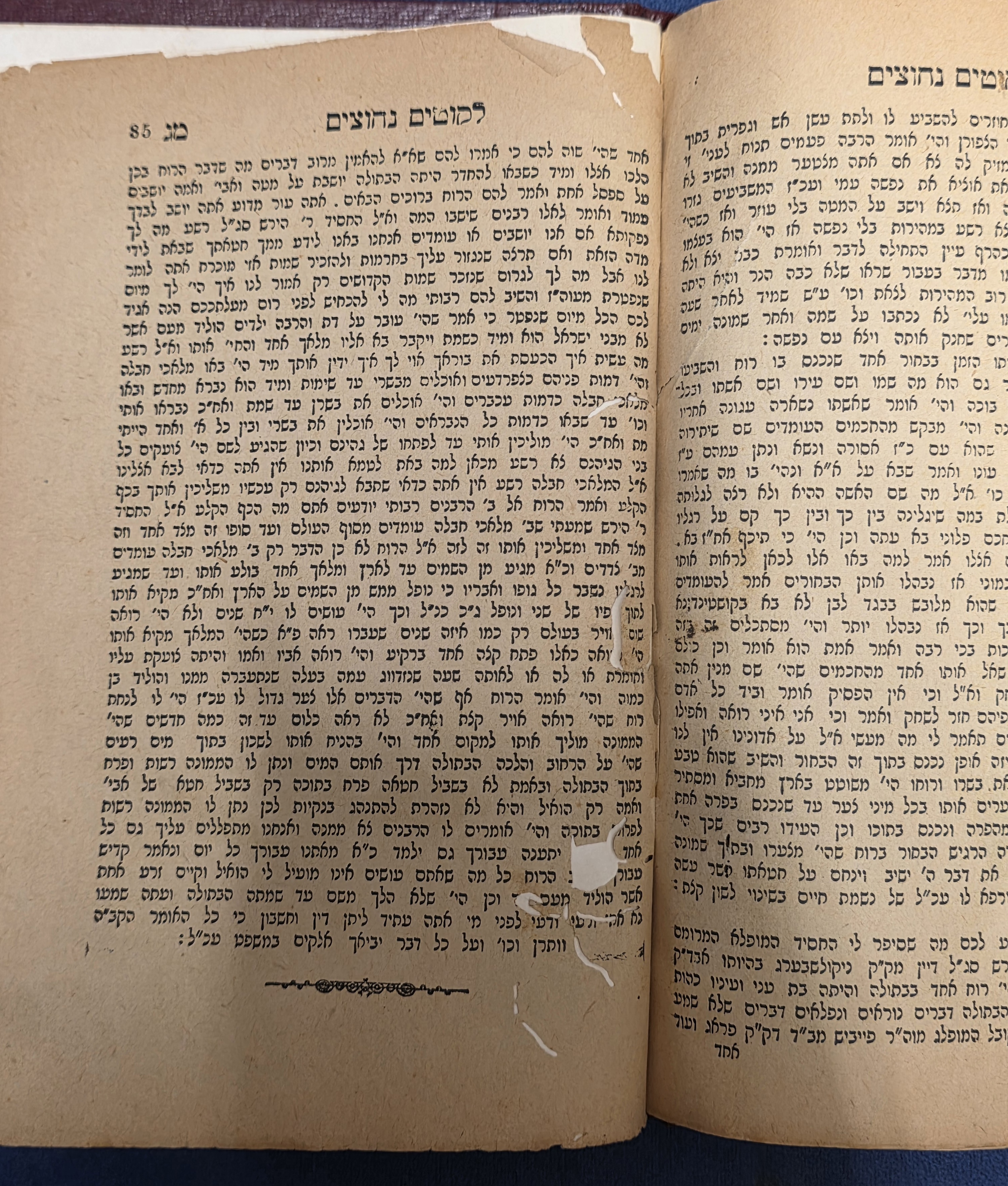
Details: The hardcover features a deep reddish-brown textured binding with clear, gold-gilt Hebrew lettering stamped on the spine. The cover shows minimal wear for its age. Internally, the paper is visibly browned (toned) throughout, which is characteristic of the paper stock used during this period. While the pages are somewhat fragile to the touch, they are not brittle or actively breaking, and the text block remains structurally stable. The title page displays historical owner\'s stamps and minor edge wear. Notably, the final leaf (page 85) exhibits a few small holes (paper loss/worming) near the bottom of the page, affecting a few letters but not severely compromising the overall legibility. Otherwise, the text remains remarkably dark and clear throughout.