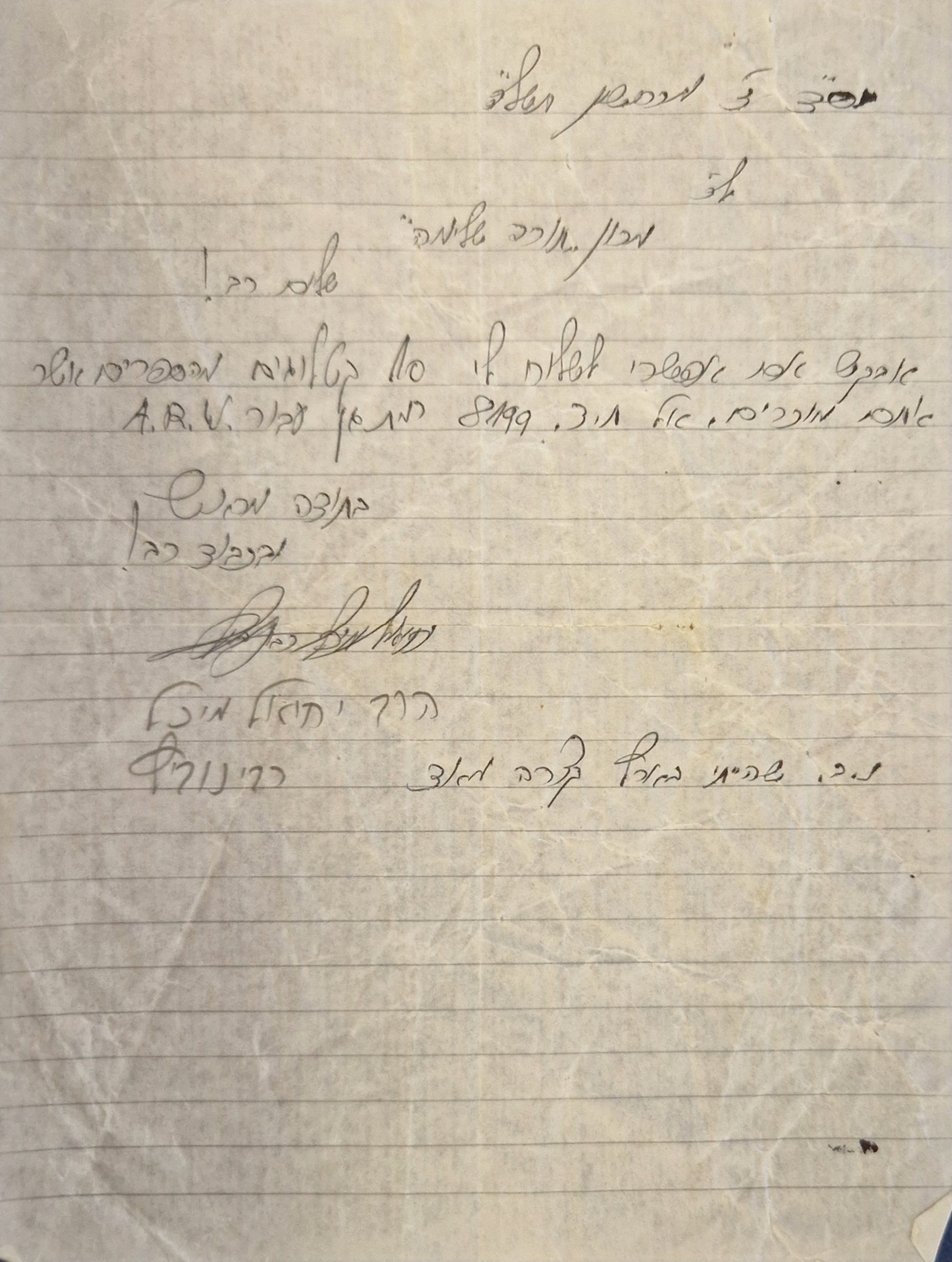
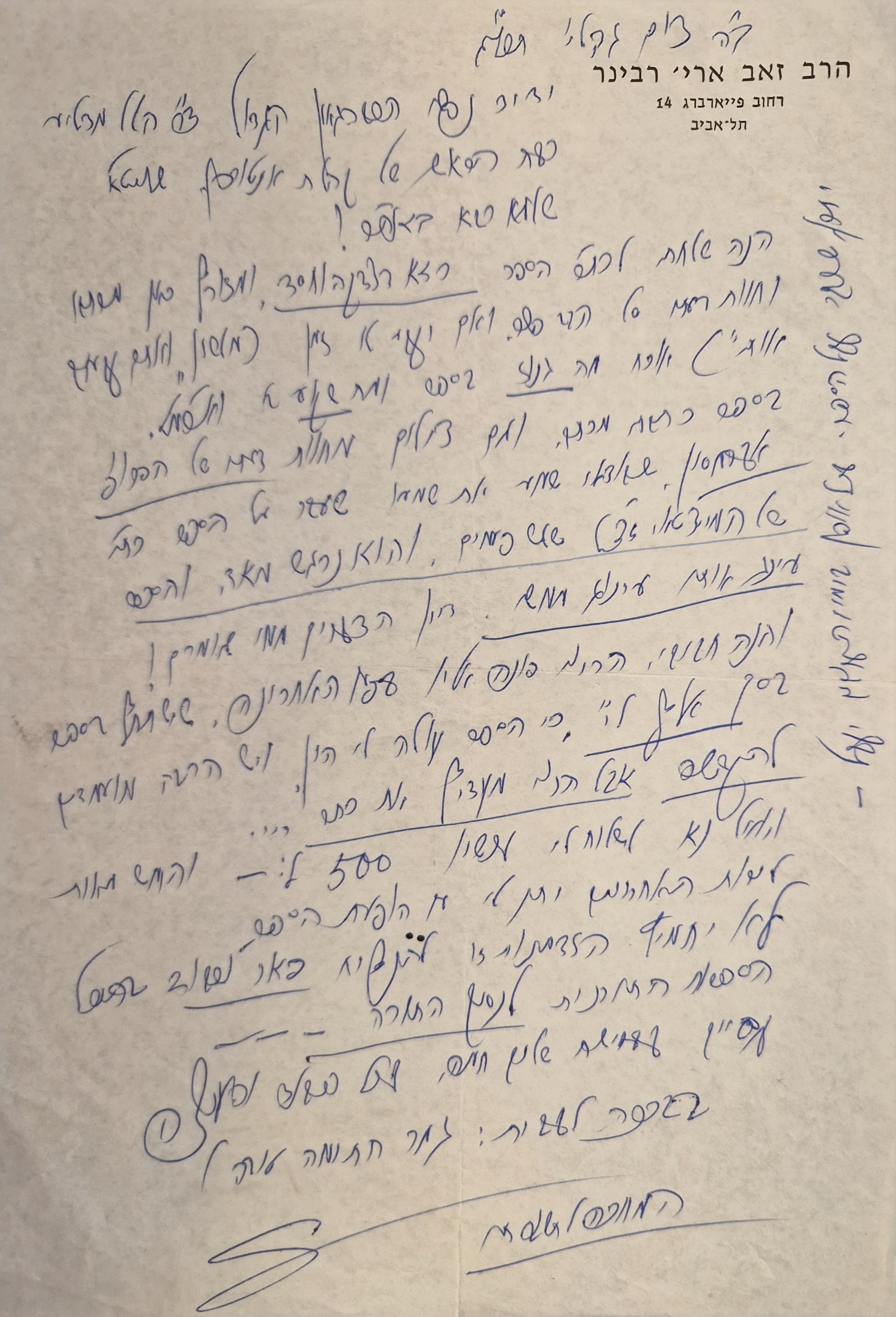
This lot features two original autograph letters from influential 20th-century rabbinic figures, documenting the intellectual and logistical efforts to rebuild the world of Torah literature after the war.
- Letter 1: Rabbi Yechiel Mechel Rabinowitz regarding the "Torah Shelemah." An original handwritten letter from the renowned Rabbi Yechiel Mechel Rabinowitz. In this fascinating correspondence, the Rabbi specifically requests a set of Torah Shelemah (תורה שלמה). This request is particularly noteworthy because the work’s author, Rabbi Menachem Mendel Kasher, was a highly controversial figure in many Haredi circles. While Kasher was recognized as a phenomenal genius, his perceived leanings and methodology led many in the traditionalist world to avoid quoting or even owning his works. This letter captures a moment of intellectual independence by a prominent Hasidic scion seeking out a masterpiece of scholarship despite its controversial status.
- Letter 2:Rabbi Zeev Aryeh Rabiner on Publishing and Finances. A detailed autograph letter signed by Rabbi Zeev Aryeh Rabiner, written on his official stationery in Tel Aviv, dated January 30, 1950. The letter provides a rare, "behind-the-scenes" look at the immense financial and technical burdens of Jewish publishing in the early years of the State of Israel. Rabiner discusses the printing of 2,000 copies of his work and the significant sum of 500 Liras required for binding—a staggering amount for the time.
Author:
Rabbi Yechiel Mechel Rabinowitz (יחיאל מיכל רבינוביץ): A distinguished scion of the Skolya Hasidic dynasty (שושלת חסידות סקאליע) and a prominent Rav and community leader in Boro Park. Known for his deep scholarship and leadership, he represented the bridge between the old world of European Hasidism and the burgeoning American Torah center.
Rabbi Zeev Aryeh Rabiner (זאב אריה רבינר): The premier historian of Lithuanian Jewry (יהדות ליטא). A close disciple and biographer of Rav Kook (הראי"ה קוק), he authored monumental works including Or HaMeir (אור המאיר), Ohr Mufla (אור מופלא), and definitive biographies of the Rogatchover Gaon and the Neziv of Volozhin.
Notable Connection:
These letters offer a striking contrast in the post-war rabbinic world. In one, we see the high-stakes financial struggle to publish the history of Lithuanian giants in Tel Aviv; in the other, we see a Hasidic leader in America reaching across ideological lines to acquire a "forbidden" masterpiece of encyclopedic scholarship. This lot is a "tremendous bridge" to the intellectual history of the 20th century, perfect for collectors of rabbinic manuscripts and those interested in the social history of the Hebrew book.