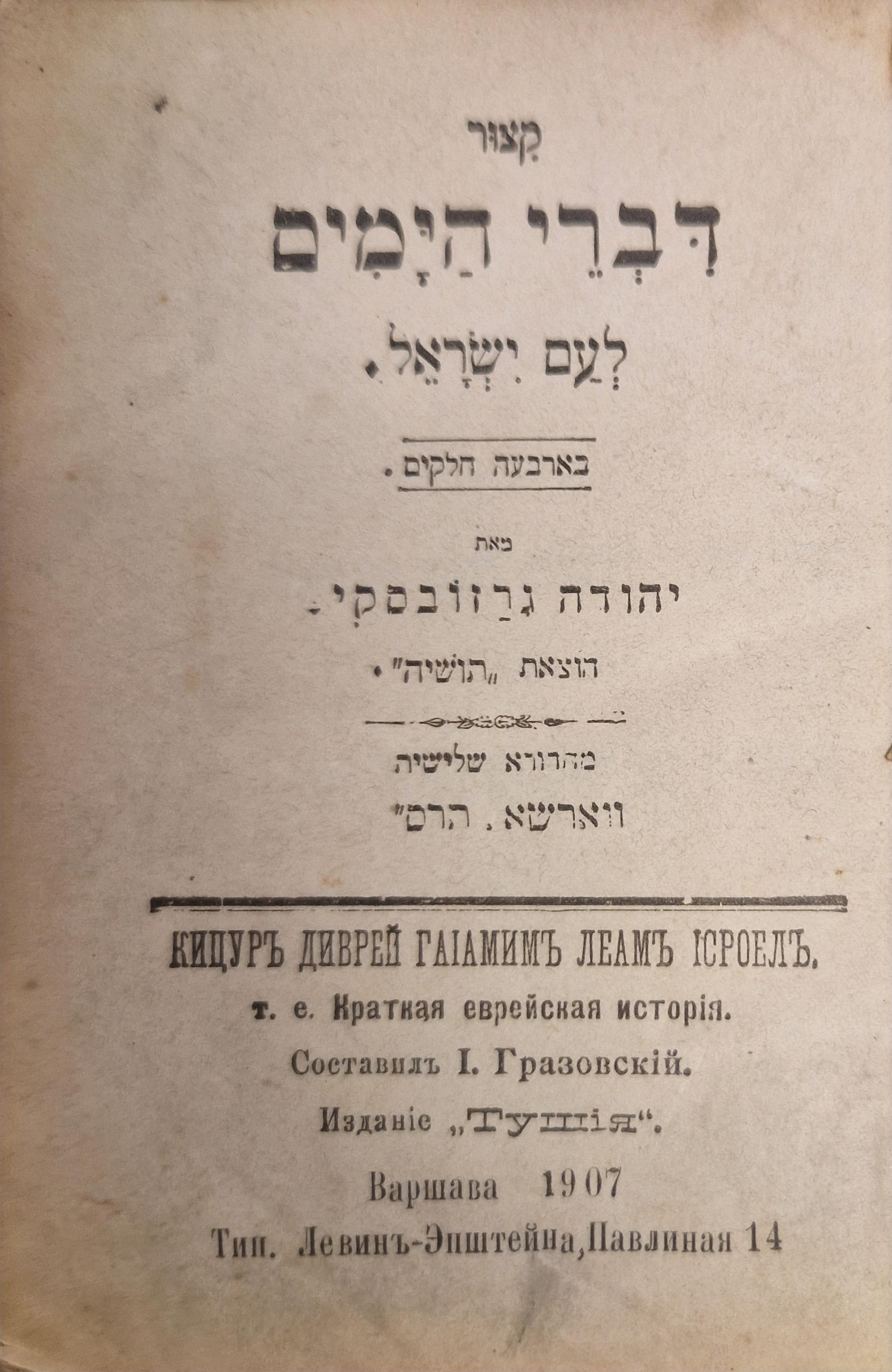
Overview: A rare and highly significant early 20th-century secular Hebrew history textbook titled Kitzur Divrei HaYamim Le-Am Yisrael (קיצור דברי הימים לעם ישראל / A Concise History of the Jewish People).
Author: Compiled by the legendary Hebrew linguist, lexicographer, and educator Yehuda Goor (Grozovski) (יהודה גור [גרזובסקי]; 1862–1950). Goor was a pioneering force of the First Aliyah, a close collaborator of Eliezer Ben-Yehuda, and famously compiled the monumental Goor Hebrew Dictionary.
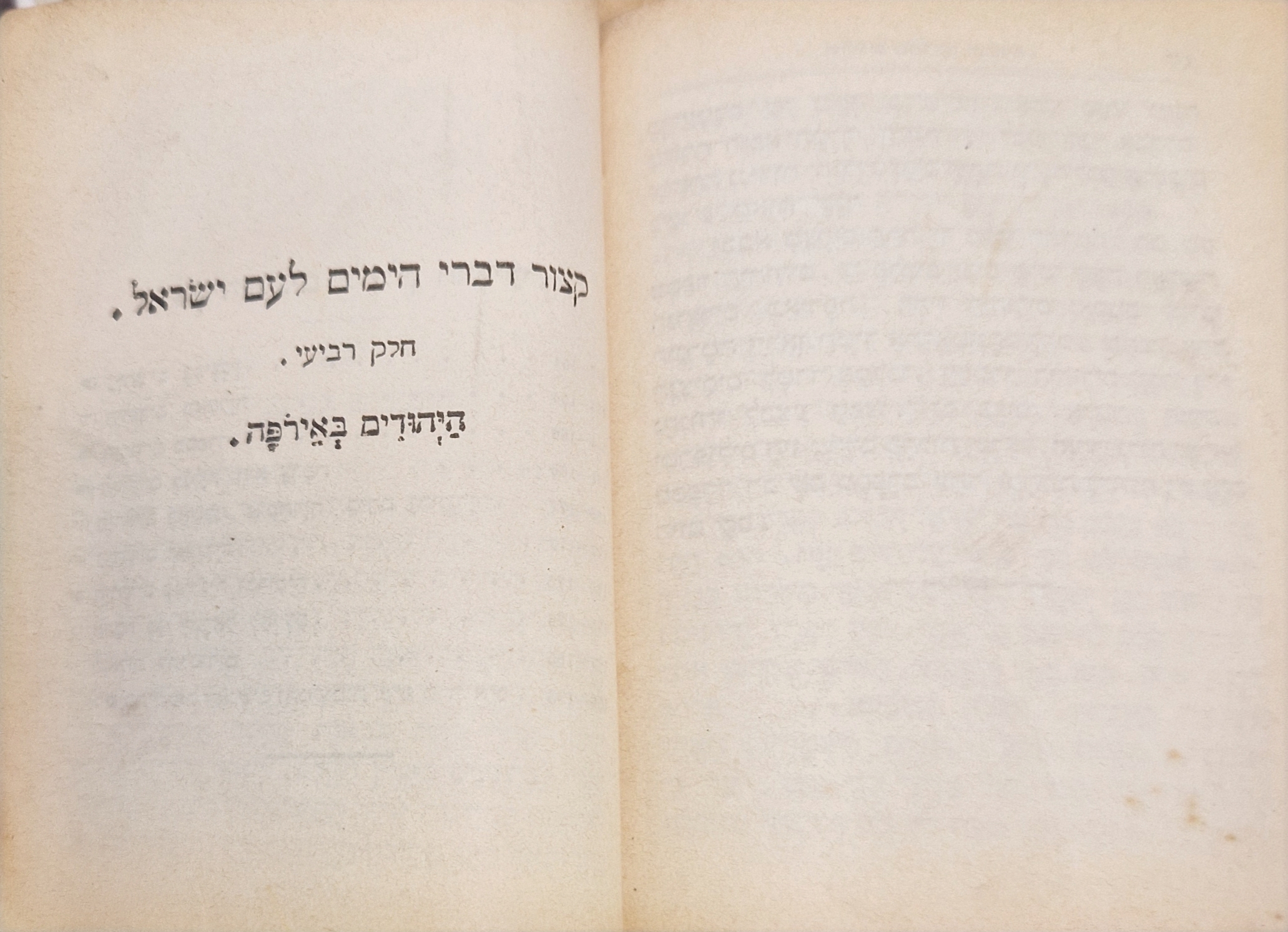
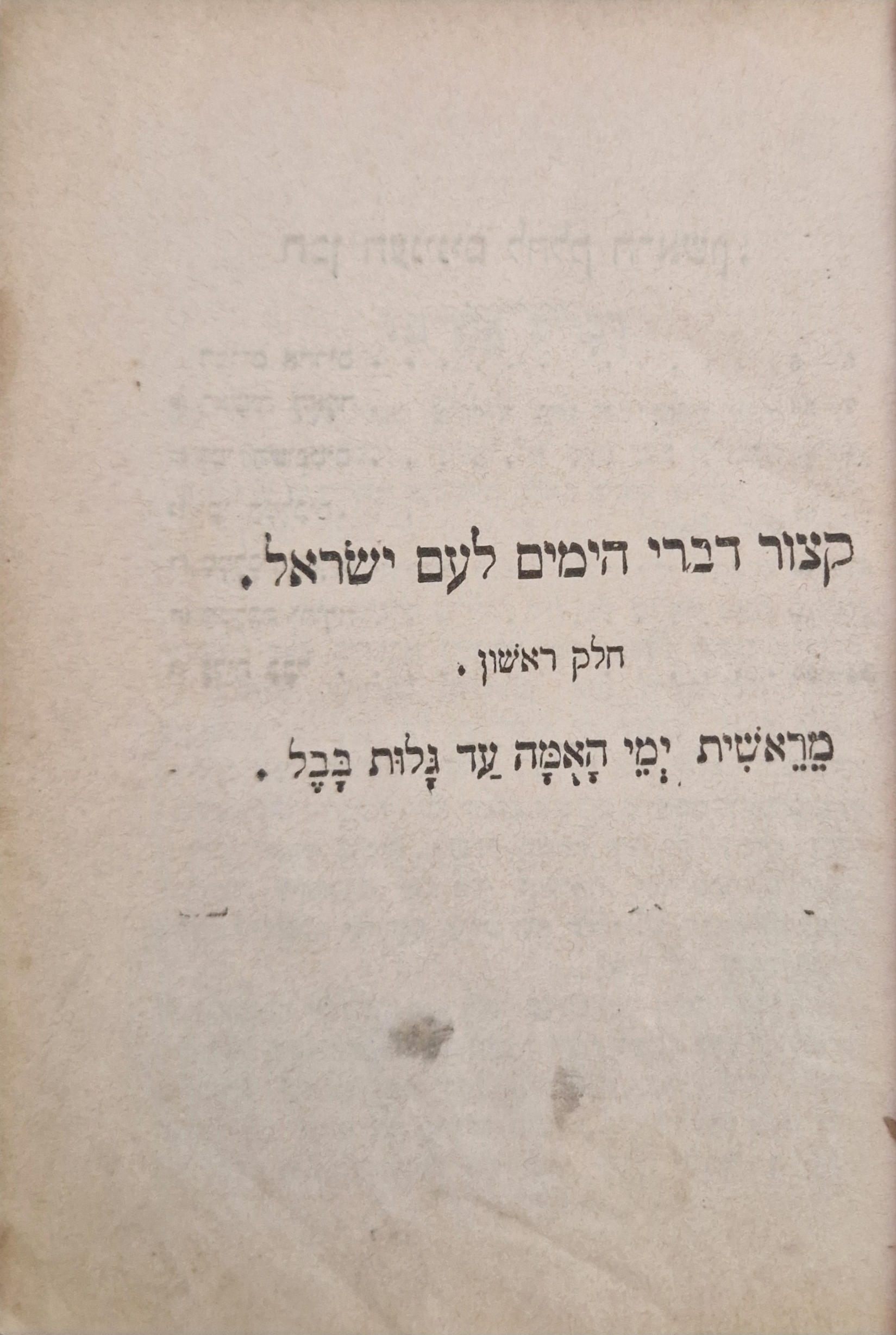
Structure & Content: Spanning 198 complete content pages, this work was dynamically designed to teach Jewish history chronologically as a national epic across four distinct internal sections:
Part I: Mi-Reshit Yemei Ha-Umah Ad Galut Bavel (מראשית ימי האומה עד גלות בבל — From the Dawn of the Nation to the Babylonian Exile).
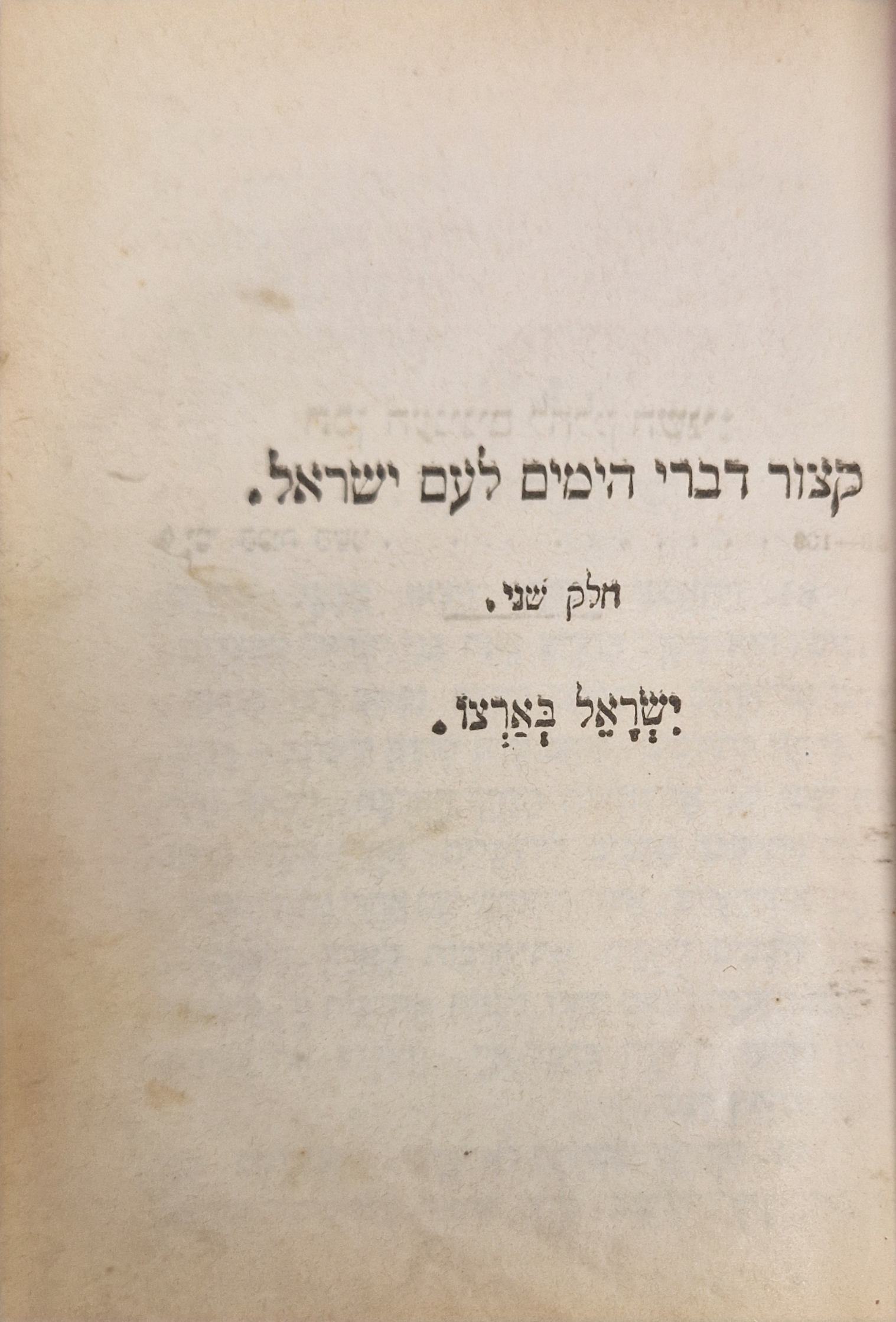
Part II: Yisrael Be-Artzo (ישראל בארצו — Israel in its Land / The Second Temple Era).
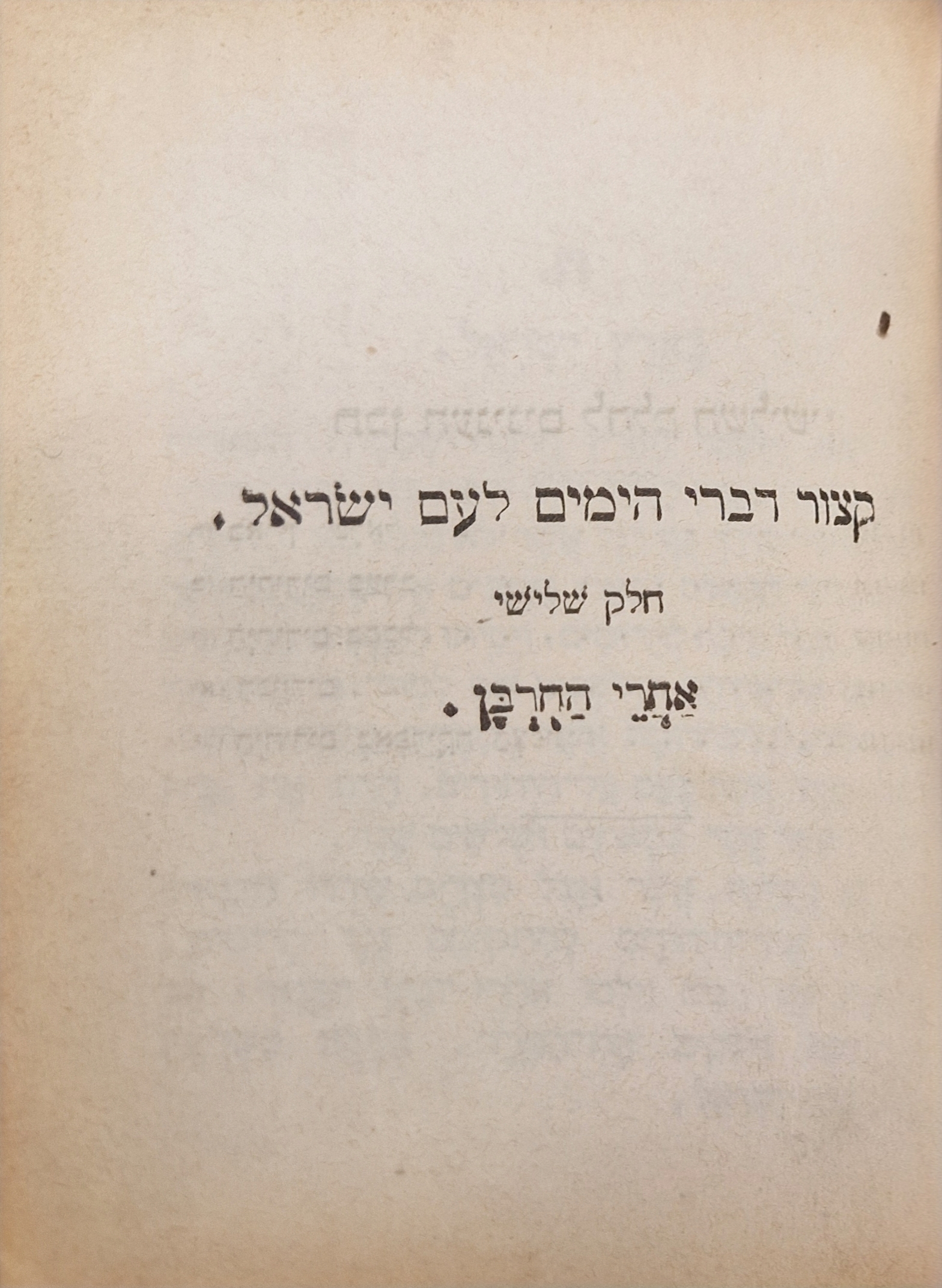
Part III: Aharei Ha-Churban (אחרי החורבן — After the Destruction of the Temple).
Part IV: Ha-Yehudim Be-Europa (היהודים באירופה — The Jews in Europe).
Print Origin & Context: Published as part of the influential Tushiyah (תושיה) library series in Warsaw (ווארשא) in 1907 (תרס"ז), printed by the historic Levin-Epstein press at Paulinaya 14. Features parallel title page layouts and official Russian Imperial censorship credits in Cyrillic script.
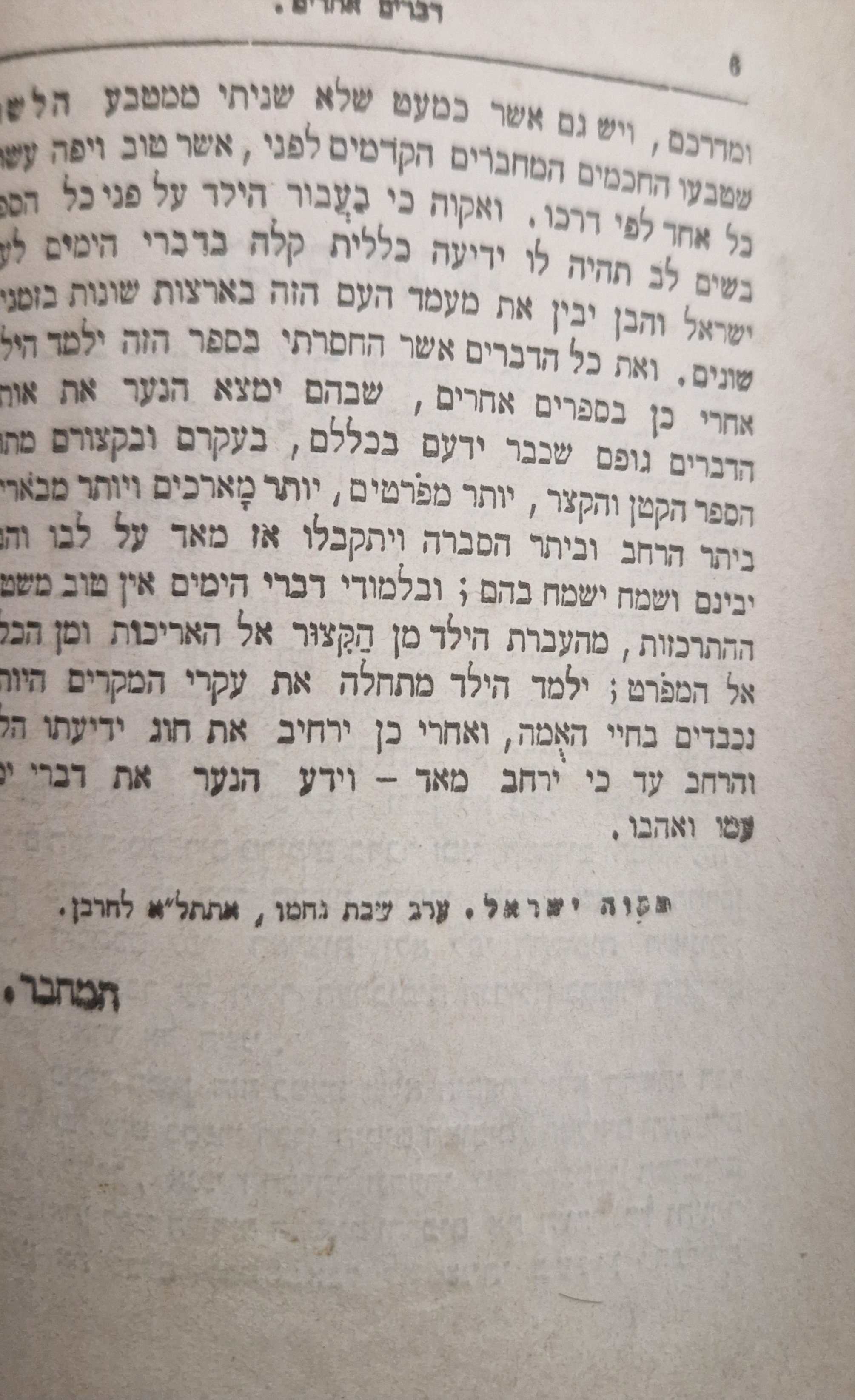
Notable Ideological Feature: Famously, at the conclusion of his historical preface, Goor signs off the date not by the standard regular or Hebrew calendar years, but poetically anchors it to national history: "Eve of Holy Shabbat, 1,831 years since the Destruction" (ערב שבת נחמו, אתנל"א לחורבן). This highlights the secular nationalist philosophy of the turn-of-the-century Hebrew revival network.
Condition report:
Status: Antique Student Study Copy (Textually 100% Complete).
Size: Small Octavo (8vo format), measuring approximately 7.1 × 5.0 inches (18 × 12.5 cm).
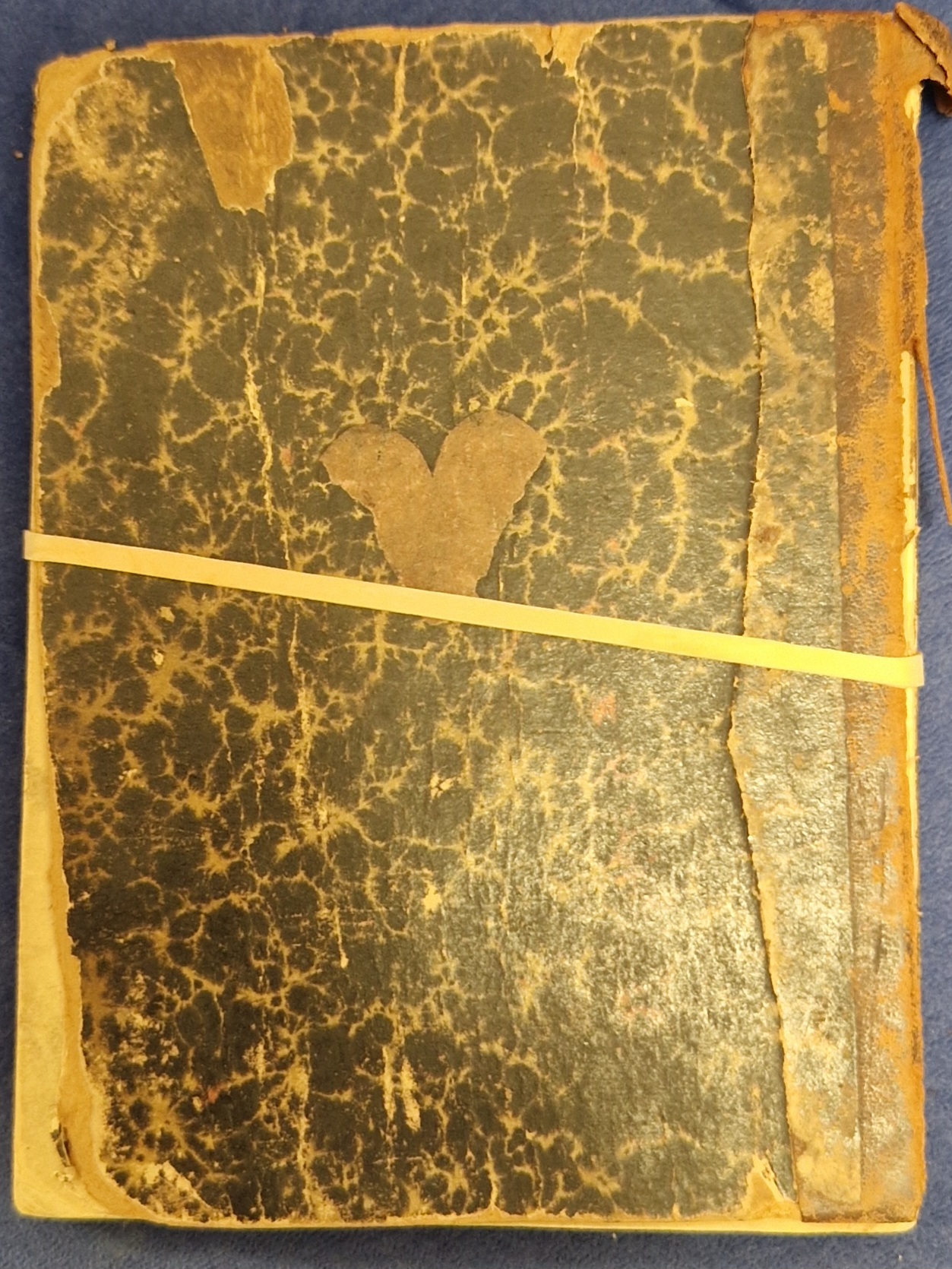
Binding: Lacks the spine backing cloth; the front and rear original marbled paper boards are entirely detached from the text block and are currently held temporarily together via a functional rubber band.
Interior: Complete with all 198 pages of text and early section titles. The text block binding thread is exposed along the outer edge but remains holding. Leaves exhibit uniform natural age-toning, soft handling wear, and minor corner creasing typical for a heavily referenced historical schoolbook. The print remains crisp and fully legible throughout.